
The Revolution Begins: Why Your First Step Changes Everything
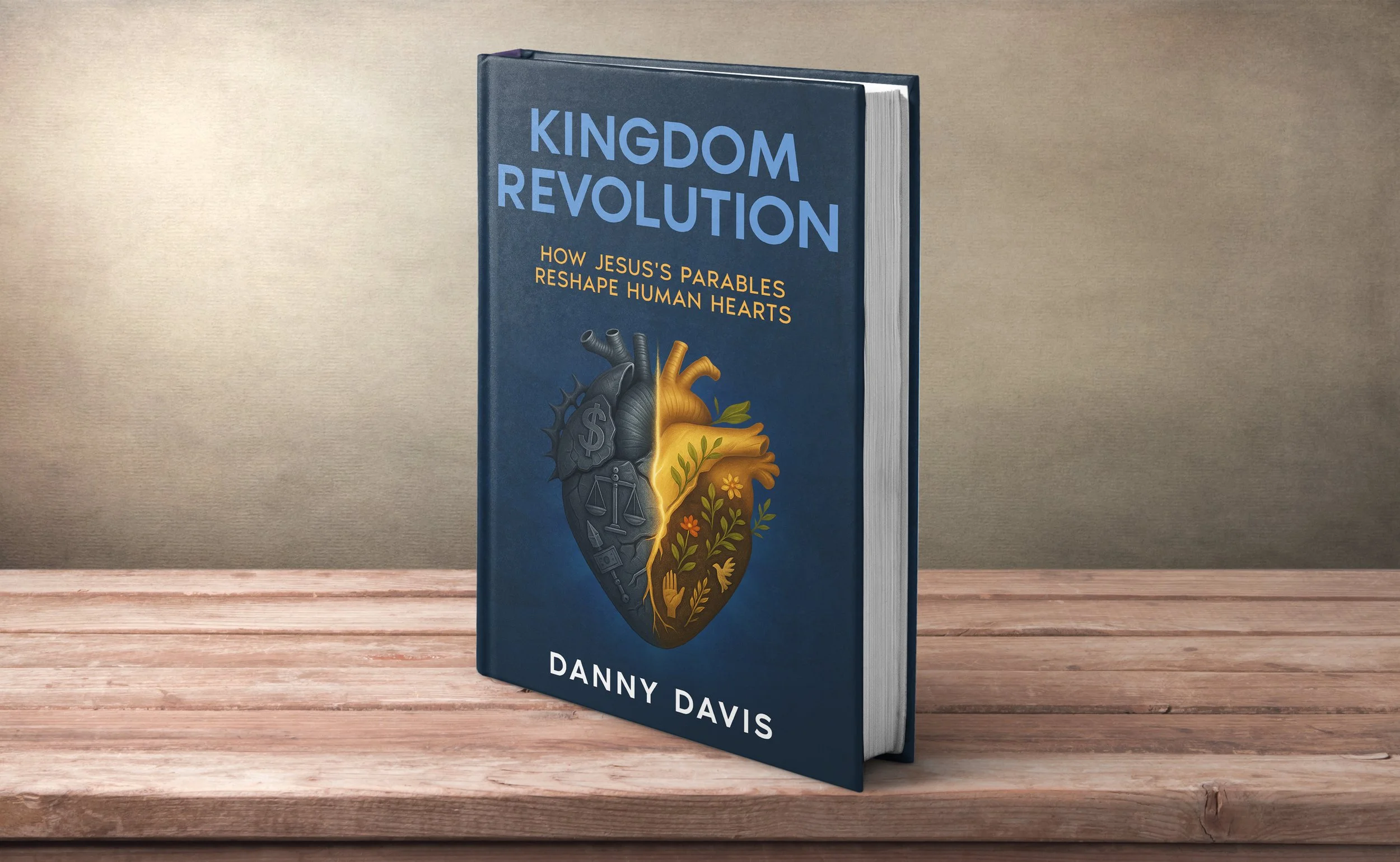
Click on the image to ORDER Kingdom Revolution (eBook & Paperback) from Amazon today!!
You're somewhere in your life right now where you have to choose something. Maybe it's today. Maybe it's this week.
What if it's a conversation where you could save yourself by lying just a little? What if it's a moment where you could advance by compromising? What if it's deciding whether to keep score with someone who hurt you, or to forgive anyway? What if it's the choice between security and generosity?
And in that moment, you realize something: You've spent your entire life trying to manage these situations.
By "managing," I mean trying to guarantee outcomes. Trying to control what happens next so you feel safe.
You manage your worth through accomplishment. That moment when you realize you're only valuable on days when you've achieved something. When you've been productive. When you have something to show for your time. Rest feels irresponsible. Stillness feels like failure.
You manage how others see you through image control. You manage security through hoarding. You manage relationships through keeping score. You manage outcomes through strategic planning.
In other words: You manage everything.

ORDER MY NEW BOOK TODAY FOR $9.99 (eBook)
The Pattern Jesus Kept Using
Over the past few weeks, I've been writing about Jesus's parables—twelve stories that tear down every control system you depend on. Jesus didn't pick random stories. He aimed them all at the same target. From different angles. Same lie. Over and over.
Watch the pattern. In the Good Samaritan—you don't get to choose who deserves your compassion. Your sorting is wrong. God's sorting matters. Period.
In the Prodigal Son—grace doesn't require you to prove your change first. In the Vineyard Workers—your hours of labor don't buy you more value. In the Sower—you can't guarantee the harvest.
Jesus keeps attacking the same lie from different angles. And you can't unsee it once you see it.
But here's where most people get stuck: Understanding the truth and actually living the truth are two completely different planets.
That's exactly why I wrote Kingdom Revolution. Not to convince you intellectually—you already get it. But to arm you practically. To show you what the next step actually looks like. In your career. In your money. In your family. In your leadership.
Not as theory. As practice.
Maybe you're there now. Maybe you've read through the series and something in you is saying: Yes, this is true. But if I actually live this way, what happens to my career? My family? What do I tell the people around me who might think I'm abandoning every responsible value we were taught? How do I convince them this is worth the cost?
Your mind is already running through the objections. The practical concerns. The people who'll be confused or hurt.
And I need to tell you something important before we go further: You're asking the wrong question.
Not because your concerns aren't real—they are. But because you're still trying to manage the outcome.
The Thing Nobody Tells You About Revolution
Think about what changed in the earliest days after the resurrection. The disciples didn't get permission to start anything. Peter didn't wait for agreement from the council. He didn't have research proving that grace worked better than judgment.
What did happen? People began living differently.
Not all at once. Not with a plan or a strategy. But one person at a time. In small, observable ways.
What changed? Peter went from hiding in fear to speaking publicly about the very people who'd killed him. Tax collectors stopped taking bribes. Rich women started sharing their inheritance.
These weren't small tweaks. They were complete reversals. These people rewrote how they managed their lives and their safety.
And here's what happened: Others noticed.
Not because someone convinced them with words. But because they saw something real. Something that broke their categories.
They watched someone forgive the person who'd betrayed them. They watched people face arrest without panic or bitterness. They watched grace work in real time.
And they couldn't unsee it. The spell was broken. They'd seen a better way.
But here's where it gets complicated: When you start living this way, you can't control what happens next. You can't manage the outcome.
Think about it—what if your spouse doesn't understand? What if your boss sees it as a liability? What if the people you expected to support you don't? What if your kids resent the way you're raising them?
These are the kinds of outcomes you can't guarantee. And that's exactly the kind of control these parables are asking you to release.
The Cost Is Real (So Stop Pretending It Isn't)
Before I tell you why this is worth it, let me be honest: This costs something. I need to say that clearly.
What if you stop managing your image? Some people might misunderstand you. What if you practice radical generosity? You might have less security. What if you refuse to keep score in relationships? You become vulnerable to people who do. What if you raise your kids believing their worth isn't earned? You'll parent differently than most people around you. What if you prioritize integrity over advancement? You might not get the promotion.
The revolution doesn't ask you to lie about the cost. It asks you to pay it anyway.
And here's what I've come to understand: The cost of not doing it might be higher.
Consider what your life looks like if you keep managing: your entire life organized around survival. Relationships as negotiations. Children who learn their worth by the grades they bring home. An image you've protected so well that you forgot who you are underneath it.
So you're really choosing between two kinds of cost. Between two different futures.
And one of them is actual freedom.
How to Start: The Smallest Possible First Step
Now here's where people usually get stuck next. They think choosing freedom means making some grand, dramatic leap.
So let me tell you what I've learned about how this actually works.
Here's something worth questioning: Do you think the revolution requires some grand gesture? Quit everything? Give away all you have? Announce to everyone at church that you've seen the lie?
I don't think so.
What if the revolution starts impossibly small?
What if it starts with one decision in your next impossible moment where you choose surrender over control?
Think about this carefully: What if this week, when someone wrongs you, you actually forgive them—not for their sake, but because you're done keeping score?
Notice what happens in you when you sit with that. The fear. The voice that says they don't deserve it. The urge to replay their offense one more time.
And then you let it go anyway.
Or what if it's the conversation with your boss? You tell the truth instead of positioning yourself. What if it's admitting to your kids that you don't have the answers? Or spending money on what actually matters instead of what keeps you safe? Or asking for help instead of managing everything alone?
One of these. Pick one.
It's impossibly small. It might feel insignificant compared to the revolution you've understood intellectually.
That's exactly right.
Because revolution doesn't happen through bold declarations. It happens through the thousand small decisions. The moments where you choose trust over management. Where you include instead of exclude. Where you give instead of hoard. Where you forgive instead of keep score.
One decision. Then another. Then another.
This Is How You Convince People
Here's something worth considering: What if the way people actually change isn't through arguments?
What if someone notices you're not competing with them anymore, and asks why? What if they see you giving generously and wonder what shifted? What if they watch you forgive someone who hurt you and want to know how you did that? What if they realize you're not measuring their worth by their usefulness, and they want to understand why?
The answer, you'll notice, comes after the change. It comes because they saw something real. Not because you made a logical case.
Why? Because you can argue with logic all day. But you can't argue with what you see.
When your friend watches you forgive someone without keeping score, they can't talk themselves out of it. They see it happen. And in that seeing, something shifts. They wonder: How is that possible? And in the wondering, everything changes.
Here's what matters: Don't try to convince anyone before you start.
Think about what happens the moment you do: You slip back into control mode. You're trying to manage the outcome. You're seeking permission and agreement. You're asking people to sign off on your decision before you take the step.
That's the control system winning. It's got you asking permission from others to live the life God is inviting you into.
What if the revolution started differently? With one person saying "I'm going to trust God with this instead of managing it myself." And then actually doing it.
Remember the earliest followers of Jesus? They didn't change because Peter made an argument. They changed because they watched people live differently under impossible circumstances. Calm during chaos. Generous without security. Forgiving without keeping score.
The life itself was the argument.
The persuasion comes later. Through what people observe, not what you argue.
What Your First Step Actually Changes
Here's something worth observing: Your single decision to live one kingdom value might look small. Maybe it will look odd to the people around you.
But consider this: The people in your life are watching someone live differently. Have you thought about whether some of them are wondering if there's another way? Whether they're feeling the weight of the same control systems you're feeling? Whether they'd consider changing if someone else did first?
When you become the first one, something shifts.
Picture your spouse noticing something subtle. You're not keeping a mental scorecard anymore. Not bringing up old failures when you disagree. Not subtly reminding them what you've sacrificed. Your spouse might not even know what changed at first. They just notice you're different.
And in that difference, something in them wonders: Could I release my scorecard too?
Or imagine your kids watching you admit you don't have everything figured out. Not as weakness, but as honesty. They learn that adults don't have to pretend. Your coworkers see you tell the truth when a lie would have been easier. They remember that integrity matters. Your friends watch you forgive someone who doesn't deserve it. They realize they're carrying grudges they could release.
You don't change them. But you give them permission to consider changing.
That's how transformation spreads. Not through convincing arguments. Through people who've decided to stop living the lie, and the people around them noticing that something is different.
The earliest followers of Jesus understood this. They didn't convert the Roman Empire through debate. They converted it through observation. People watched Christians forgive their persecutors. People watched them share what they had. People watched them face death without bitterness.
And the world couldn't unsee it.
The Part That Terrifies Me
I have to tell you the hardest part. And I mean hard. Not hard like it's wrong—hard like it requires actual courage.
Sometimes, even after you change, people don't follow.
Sometimes your family thinks you're being foolish or naive. Sometimes your church questions whether you've lost theological clarity. Sometimes the person you forgave takes advantage of your generosity. Sometimes your sacrifice gets misinterpreted as judgment toward people who still manage.
And you're left wondering if you made a mistake.
That happens. And it hurts.
But here's what I've discovered: Freedom is still worth it. Even alone. Even without approval.
Because the alternative is spending your whole life terrified of what people think. Performing okayness. Managing how you look. Never letting anyone see the real mess.
Consider what that means: Your spouse might need to approve your choice to stop keeping score. Your boss might need to agree before you prioritize integrity. Your church might need to sign off before you practice radical grace.
You'd be waiting for permission from people to live the life God is inviting you into.
Many of them won't give it. They might be too invested in the old system. They might be too afraid. They might be too comfortable with how things are.
You can't wait for permission. You can't wait for the whole group to understand. You can't wait until it's safe.
So here's the real choice: Do I want to spend my life terrified of what people think? Or do I want to spend it living the kingdom?
The revolution is hard. Harder than pretending. But at least it's honest.
And honesty—even if you're alone—is better than safety that's built on a lie.
Your Move
Here's where we are: You understand the pattern now. The revolution has been named and you can't unknow it.
Now comes the hard part. The small part. The part that looks insignificant but changes everything.
You have to choose one thing. One situation coming up in your life where you're going to trust instead of control. Where you're going to give instead of hoard. Where you're going to forgive instead of keep score. Where you're going to surrender instead of manage.
And you have to do it knowing it might fail. Knowing people might not understand. Knowing you might lose something. Knowing you won't be able to control how it turns out.
That's the revolution. Not the understanding. The living.
Here's what I want you to know about this moment: This decision you're about to make isn't small. It's the hinge on which everything turns.
Because once you live the kingdom once—really live it, not just think it—you can't go back to pretending that managing actually works. You've tasted freedom. You've felt what it's like to trust God instead of yourself.
That's what Kingdom Revolution is for. The book walks you through all twelve parables. Not to convince you theologically. But to equip you practically for the thousand small choices that follow this first one.
It shows you what it means to organize your career around the parables. Your finances. Your family. Your leadership. Your identity. Your legacy.
Not as theory. As practice.
But the book can't take your first step for you. Only you can do that.
So here's my invitation: What's your first decision going to be? What's the one situation coming up where you're going to choose the kingdom instead of the control? Where you're going to trust the parables instead of trust your fear?
Not the big dramatic gesture—the small, real, costly choice.
Don't tell me. Don't tell anyone. Just decide.
And then live it.
That's all the revolution needs. Not your permission. Not your guarantee of success. Not everyone's agreement.
It just needs you.
Welcome home.
This is Part 4 of the Kingdom Revolution blog series.
Part 1: The Stories That Got Jesus Killed | Part 2: What 18 Years in Africa Taught Me About American Christianity | Part 3: The Architecture of Revolution: When Your Control Systems Collapse
Ready to explore the full revolutionary message of Jesus’s parables and discover what changes when you actually live them out? Order Kingdom Revolution: How Jesus's Parables Reshape Human Hearts and join the revolution.
——
FYI: Some of the links above are affiliate links. If you choose to purchase items linked, I will receive a small commission from that sale.
If you find this blog helpful and want to say thanks, click here to buy Danny Davis a coffee.
