

Why You Forget What You Read (And It’s Not Your Fault)
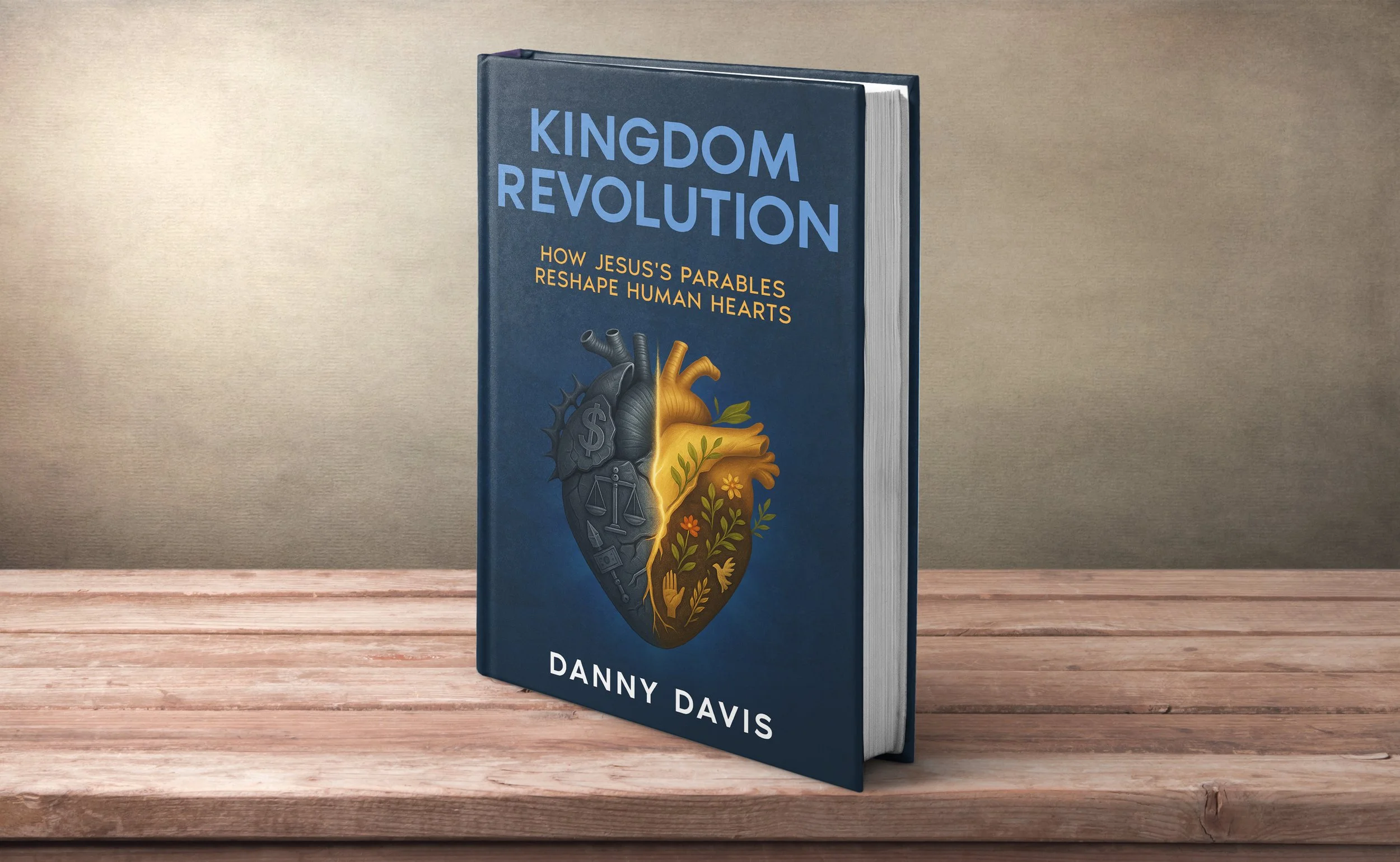
Click on the image to ORDER Kingdom Revolution (eBook & Paperback) from Amazon today!!
I have Parkinson’s Disease, diagnosed just six months ago. One way it affects me is through my cognition and memory. But here’s the thing—I’d been struggling with this for at least two years before I had a diagnosis. I’d open my Bible, settle into a quiet moment to read, and ten minutes later, I’d close it, wondering: Did I just read that, or did I imagine reading it? I couldn’t remember a single thing.
At first, I thought I was alone in this. Then I realized how many of you experience the same frustration—that sinking feeling when Scripture slips away before you can even grasp it.
My first reaction was shame.
I thought, “What’s wrong with me? How can I claim to love God’s Word when I can’t even hold onto it for more than a few minutes?” I questioned whether my faith was strong enough, whether I was paying attention, whether I was doing something wrong.
But here’s what I’ve since learned: Your brain isn’t broken. It’s working exactly as it’s designed to work. The problem isn’t your spirituality or your commitment. It’s a technique problem. And the beautiful news? Technique is something you can learn.
Here’s the central truth this series is built on: Scripture retention isn’t about having a better memory—it’s about having a better method. And I want you to know this from the start: you have access to that better method right now. Before we even get to the practical tools, let’s talk about why remembering God’s Word matters so much—not just to your productivity, but to your faith.
Understanding why you forget is the first step to remembering. But let me name something that probably brought you here: There’s a reason you’re frustrated by this. It’s not just about cognitive efficiency. You forget Scripture because you want it to matter. You read God’s Word expecting it to change you, guide you, comfort you, and challenge you. But if it vanishes from your mind within hours, how can it do any of that? The promise of Scripture—that God’s Word “will not return empty” (Isaiah 55:11)—feels hollow when you can’t even hold onto it long enough to apply it.
That’s a real spiritual problem. And it deserves a real solution. Let’s dive into the neuroscience and discover how to address this issue.

ORDER MY NEW BOOK TODAY FOR $9.99 (eBook)
The Forgetting Curve: What Neuroscience Tells Us
In the late 1800s, a German psychologist named Hermann Ebbinghaus conducted a series of experiments on himself. He learned lists of nonsense syllables—random letter combinations with no meaning—and then tested how much he could recall at various intervals: after a day, after a week, after a month.
Here’s what matters: Ebbinghaus felt betrayed by his own memory. Within hours of learning, he’d forgotten most of what he studied. Within days, it was nearly gone. He wasn’t lazy or unintelligent. His brain was following its design.
If that sounds familiar, you’re not broken either.
What Ebbinghaus discovered has profound implications for how we study Scripture. Specifically, people forget approximately 50% of new information within the first 24 hours. (This finding has held up remarkably well in modern memory research, though neuroscientists note important variables—we retain meaningful information better than random data we perceive as irrelevant.) The steepest decline happens in those initial hours after learning—what neuroscientists now call “the Forgetting Curve.”
Here’s what this looks like in real life: You read John 3:16. The words register. You understand them. But then you check your email, have lunch, and think about your day. By evening, your brain has filed that passage away in a place that’s not easily accessible.
This isn’t a sign of weak faith. This isn’t a failing memory. This is how your brain works.
Without deliberate intervention, your brain prioritizes information it perceives as important for survival and filters out everything else. Here’s the tension: God’s Word is important for the survival of your soul. Yet your brain doesn’t instinctively recognize that. It treats a Bible verse the same way it treats a spam email—low priority, file it away.
This isn’t a design flaw. Your brain’s selectivity is brilliant architecture. It filters ruthlessly so you don’t drown in information. But here’s what that means for Scripture: you have to work intentionally to tell your brain, “This matters.” You have to create conditions where God’s Word registers as important enough to retain.
Why Passive Reading Doesn’t Work
Most of us grew up with a particular model of Bible reading:
You open your Bible. You read the words. Maybe you pray about it. And then spiritual growth happens. Perhaps you highlight a verse you like, or jot a note in the margin if you’re feeling conscientious.
It’s passive. And that’s by design—we were taught that God’s Word does the work, not us. We just have to receive.
But here’s what cognitive science shows us: Reading is not the same as studying. And reading alone—without active engagement—is an inefficient way to embed information into your long-term memory.
Think about it this way. Reading a Bible passage is like watching a movie. You’re taking in information, but you’re not necessarily doing anything with it. Your eyes move across the text. The words register in your awareness. But your brain isn’t being challenged.
Ask yourself: can you recall the plot of a movie you watched six months ago? For most people, it’s gone. You remember that you watched something, maybe a general feeling, but the details have vanished.
Studying, on the other hand, is like having a real conversation with someone you care about. When someone asks questions, when you have to explain your thoughts, when you push back or laugh or get emotional, you remember it. Weeks later, you can recall what was said, how you felt, and what you learned. Your brain holds onto conversations because you were engaged. It forgets movies because you were passive.
Here’s a concrete example. Let’s say you read 1 Thessalonians 5:17: “Pray without ceasing.” You understand it. You move on. By that evening, if someone asked you what the verse said, you’d have to think hard to remember it. By next Sunday, it’s gone.
But what if, right after reading it, you paused and asked yourself: “What does ‘pray without ceasing’ mean in my life? When can I practice this today? How does this challenge me?” What if you even jotted down one answer?
Now your brain is engaged. It’s making connections. It’s processing meaning. And here’s what changes: a week later, that verse pops into your head when you’re stressed. Three weeks later, you still remember it. And it won’t be rote—you’ll remember your own thoughts about it, your own connection to it. The verse becomes yours.
How Your Brain Processes Information
To understand how to work with your memory instead of against it, it helps to understand something important: there’s a reason Scripture slips away. Your brain isn’t failing. It’s following a very specific process. And if you are familiar with this process, you can intervene at precisely the right moment.
Think of it as a three-stage journey that information takes from the page to permanent memory.
Stage One: Sensory Input
Information enters through your senses. When you read a Bible verse, light reflects off the page (or your screen), and your eyes send that visual information to your brain. At this point, the information is very fragile. You can hold it in what neuroscientists call “sensory memory,” but it will disappear almost instantly if you don’t do something with it.
This is why distractions are so deadly to Bible reading. If you’re reading and your phone buzzes, or you’re hungry, or your mind wanders to your to-do list, your brain might not even get the sensory input into the next stage.
Stage Two: Working Memory
If you pay attention to the sensory input, it moves into your working memory. This is your brain’s short-term processing space—where you hold information while you’re actively thinking about it.
Here’s what matters: your working memory has a minimal capacity. Most neuroscientists now say around 3-4 pieces of information at once (though it varies by person). And you can only hold it for about 20-30 seconds without actively thinking about it.
So when you read that verse and think about what it means, you’re using your working memory. You’re turning it over in your mind, connecting it to other things you know, asking questions about it. But here’s the critical insight: Once you stop thinking about it and move your attention elsewhere, your working memory releases it. That’s why the verse seems to vanish from your mind a few minutes later. You’re not forgetful—your working memory is doing exactly what it’s designed to do.
Here’s what this means for Bible study: when you read a complex verse like Philippians 4:6-7, you can’t hold all of it in active thought at once. By the time you reach the end of the verse, the beginning has already started to fade from working memory. This is why reading a verse once and expecting to remember it is like trying to hold water in your hands—it’s going to slip away.
Stage Three: Long-Term Memory
For information to stick around, it needs to move into your long-term memory. This is the warehouse where enduring knowledge is stored.
Here’s what’s crucial: information doesn’t automatically move from working memory into long-term memory just because you’ve thought about it once. Your brain asks a question first: “Is this important? Do I need to remember this?” If the answer is yes, your brain strengthens the neural pathways associated with that information, making it easier to access later. This strengthening happens through repetition, through engagement, through making meaningful connections, through practice.
Here’s a concrete example: cramming for a test might get you through the exam, but you forget everything a week later. Your brain didn’t have time to move the information into long-term storage. But when you return to information multiple times, from different angles, your brain says, “Okay, this matters,” and it solidifies those neural pathways.
The same principle applies to Scripture. You can’t expect to read a verse once and have it permanently lodged in your memory. But if you engage with it multiple times—reading it, thinking about it, recalling it without looking, applying it to your life—your brain will recognize its importance and hold onto it.
Does this resonate with you? Have you ever read a Bible passage, understood it, and then wondered thirty minutes later where it went? That’s not a sign of poor discipline or weak faith. That’s your working memory doing what it’s designed to do—releasing information that you didn’t move into long-term storage.
The good news is that you can change that.
The Critical Role of Attention
Here’s something important to understand: a lot of our Bible reading time is done while we’re not paying close attention. And before you feel guilty about that—don’t. You’re not weak or undisciplined. You’re human. Life is loud and demanding.
We read while we’re still thinking about yesterday’s work stress. We read while we’re mentally composing a text message. We read while we’re half-listening for the kids in the other room. We read on autopilot while our minds are somewhere else entirely. These aren’t moral failures. They’re everyday realities.
And then we wonder why we can’t remember what we read. Now you know why.
You cannot encode information into your memory without paying attention to it. Attention is the gatekeeper. Without it, the information never makes it into working memory in the first place.
Does this mean you need laser-like intensity every single time you read the Bible? No. That would be exhausting, and honestly, it’s not sustainable. But it does mean being intentional about creating space for focus.
It means putting your phone in another room. It means choosing a time of day when your brain is relatively alert. It means reading without trying to multitask. It means, at least some of the time, creating conditions where you can pay close attention to God’s Word.
Here’s the truth: a lot of our memory struggles aren’t really memory problems at all. They have attention problems. We’re not giving our brains the information to begin with.
So What Have We Learned?
Let me pause here and give you a moment to land what you’ve just absorbed. You’ve processed a fair amount of neuroscience, so let me summarize:
Your brain naturally forgets approximately 50% of new information within 24 hours. That’s not you—that’s your brain’s default setting.
Passive reading alone is inefficient. You need active engagement.
Your attention is the gatekeeper. Without it, information never makes it into working memory.
Most memory struggles are really attention struggles. You’re not giving your brain the information to begin with.
None of this is your fault. All of it is fixable.
What’s Coming Next
Understanding why you forget is powerful. But understanding alone doesn’t solve the problem. What you really need are tools—concrete, practical techniques that work with your brain instead of against it.
In Part 2, I’m going to walk you through four brain hacks that make Scripture stick. These aren’t complicated memory tricks or outdated memorization methods. They’re neuroscience-backed techniques that leverage how God designed your brain to learn and retain information.
You’ll discover:
Spaced Repetition: the single most effective way to defeat the Forgetting Curve and make information move from working memory into long-term storage.
Active Recall: why testing yourself is more powerful than reading the same verse over and over, and how to use it in your Bible study.
Chunking and Association: the secret to making Scripture personal and meaningful by breaking passages into smaller pieces and connecting them to your life.
Multisensory Learning: how engaging more of your senses (sight, sound, touch, movement) creates stronger neural pathways and helps you retain more.
Each of these works. Each of these is backed by research. And here’s what matters most: each of these can transform not just your memory, but your relationship with God’s Word.
When Scripture sticks, something shifts. It’s not just in your mind—it’s in your heart. A verse you’ve truly engaged with becomes a comfort in crisis. A truth you’ve deeply considered becomes a guide when you’re uncertain. A promise you’ve truly remembered becomes an anchor in the storm.
Next week, we’re going to dive deep into each of these techniques and show you exactly how to apply them to your Bible reading time. By the end, you’ll have a toolkit—a set of concrete methods you can use starting today.
Until then, sit with this truth: You are not failing. Your brain is not broken. There’s a reason you forget, and there’s a solution.
God’s Word deserves to be remembered. And your brain is fully capable of holding onto it—once you know how.
[Stay tuned for Part 2: The Four Brain Hacks That Make Scripture Stick — coming next week.]
——
FYI: Some of the links above are affiliate links. If you choose to purchase items linked, I will receive a small commission from that sale.
If you find this blog helpful and want to say thanks, click here to buy Danny Davis a coffee.
