
The Architecture of Revolution: When Your Control Systems Collapse
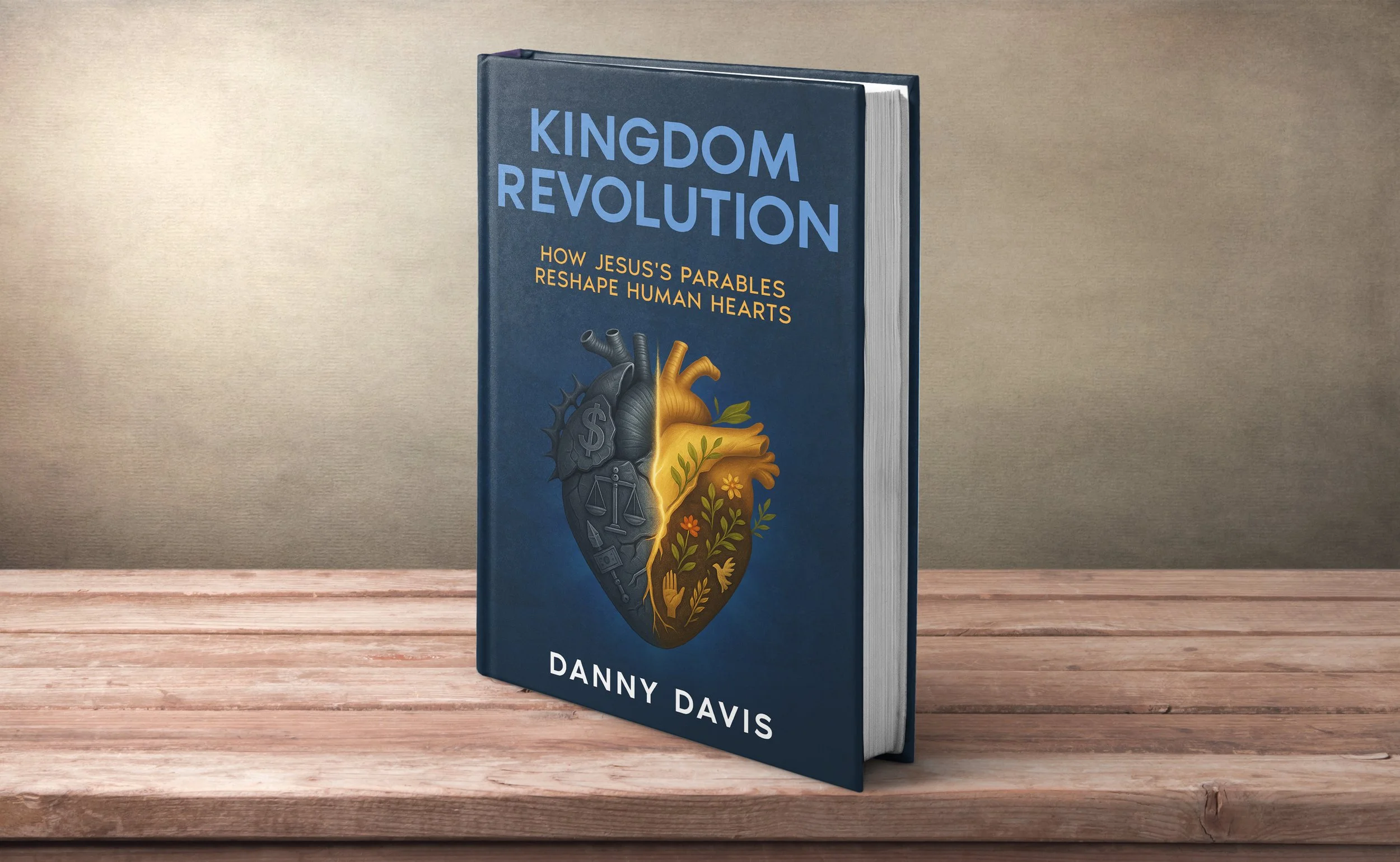
Click on the image to ORDER Kingdom Revolution (eBook & Paperback) from Amazon today!!
You’ve seen the pattern now. You know how your culture shaped you. You understand that merit-based thinking shapes everything: religion, economics, and social structure. You can’t unsee it.
Understanding the pattern and living it are two different things. Seeing the lie is one thing. Changing is another.
Here’s what I want to share: when everything you’ve built your life around stops working, you uncover important truths about your beliefs and about yourself.

ORDER MY NEW BOOK TODAY FOR $9.99 (eBook)
The Moment Everything Reverses
Here’s the thing nobody talks about: Your theology only holds together while you’re still in control.
When control over my contributions begins to slip, the beliefs I once held about my worth start feeling fragile. I believed that my worth isn't earned, yet I lived as if it was—deriving value from what I brought to the table. These two perspectives coexist without conflict until my contributions disappear. In that moment, the theology that once felt safe shows its true colors: it was always contingent on my ability to produce.
I watched this happen to a pastor I know. He’d built his entire identity on being the person who always knew what to do. Strategic. Wise. The guy with the plan. When his marriage fell apart, his strategy couldn’t save it. His wisdom couldn’t fix it. His plans meant nothing. And in that moment, all his theology (which he genuinely believed) suddenly felt hollow. Not because it was wrong, but because it had no foundation outside of his control.
That’s the gap between intellectual faith and faith that demands something from you.
What Parables Reveal When You’re Desperate
The Vineyard Workers parable becomes something else entirely when you can’t work anymore.
It’s not a comforting story about God’s generosity. It’s God saying, “Your productivity was never what I was after in the first place. Your work doesn’t buy you anything. Your contribution doesn’t increase your value. You receive the same payment whether you labored all day or showed up at the last hour.”
That’s not comforting when you’re healthy. It’s liberating when you’re not.
But there’s a layer to this I didn’t grasp until I had to live it: We use productivity to feel like we matter. Take that away, and we become invisible.
The Prodigal Son becomes something else: just a story that stabs you when you’re failing.
Yes, the feast costs the community. But read it as someone who’s losing control: The father doesn’t say, “Prove yourself first. Show me you’ve changed. Let’s wait and see if it lasts.” He doesn’t create a probation period. He throws a party before any proof.
That means grace doesn’t wait for you to solve your problems first. Grace doesn’t require you to demonstrate your worthiness. Grace doesn’t need you to have a plan or proof that you’ll succeed.
I imagine what that welcome would look like. Not after I’ve figured out my health situation. Not after I’ve created a plan for managing Parkinson’s. Not after I’ve done enough rehabilitation or spiritual work to deserve God’s attention again. But right now, in the middle of the mess, shaking and uncertain and terrified. That’s when the father throws the party. That’s the revolution. We’re so used to the message “get yourself together, then come to Jesus” that we can’t imagine Jesus celebrating you in the middle of your breakdown.
But what if grace works that way?
What if grace comes first, and transformation is the response to being welcomed, not the requirement for it?
Think about it. If transformation is the requirement, then repentance becomes another performance you have to nail. You have to shed tears of genuine sorrow, pray the proper prayer, show enough regret. But if grace comes first? Then you’re already welcomed. The father’s party doesn’t happen after you’ve proven yourself. It happens while you’re still a disaster. And in that radical welcome. In that undeserved celebration. Transformation happens. You change because you’ve been loved, not to earn love.
Grace begins in God, not in us.
We’ve Split Grace Into Two Different Churches
Here’s something most churches won’t admit: We’ve split grace into two different churches.
I watch this happen all the time. We have a theology that says, “you’re accepted as you are,” and a practice that says, “but please change quickly and quietly.” We say grace is free, then we create invisible scorecards for who’s “really serious” about their faith. We say God loves unconditionally, then we withhold community from people who don’t meet our standards. We say our worth isn’t performance-based, but we quietly keep score of what we’ve accomplished this year.
Grace gets locked into the sermon and the theology statement, while the actual life of the church runs on a different system entirely.
And we do this because the alternative terrifies us. When everything stops working. When we can’t manage anymore. We panic. We start negotiating with God. “Okay, I accept I’m not earning my way to heaven. But surely I can still control my health, my future, my influence, my legacy.”
We can’t tolerate real grace. Real grace means you can’t control what happens next. You can’t guarantee the outcome. You can’t manage the risk.
Now Here’s Where This Gets Dangerous
Because once you see how the Vineyard Workers and Prodigal Son parables work when your control is failing, you start noticing something about all the others.
Here’s what connects all twelve parables in the book: Every one presents the same choice, just in different contexts. The choice isn’t “Will you understand this?” It’s “Will you surrender the control system this parable is attacking?”
Take the Good Samaritan. It’s not asking if you understand ethnic prejudice. It’s asking: Will you stop sorting people into categories: righteous and unrighteous, worthy and unworthy, the kind of person God would use and the kind he’d reject? Will you accept that your categories might be backward? That the person you’d never trust with spiritual leadership might be the one who understands God’s kingdom?
Or the Pharisee and Tax Collector. It’s not asking if you understand religious pride. It’s asking: Will you release your merit scorecard? Will you accept that someone with no accomplishments might go home more justified than you?
Or the Sower. It’s not asking if you understand faith. It’s asking: Will you let go of your need to see results? Will you plant seeds in soil you can’t guarantee will produce a harvest? Will you be faithful even when you’re uncertain about outcomes?
That’s the pattern across all the parables. Each one asks you to release something different. Each one costs you something you thought was security.
You might wonder why Jesus needed twelve parables. Why not just say once: “Stop trying to control everything”?
Because control is the most fundamental lie we believe. It’s woven into every system: how we think about worth, how we manage money, how we organize society. You can reject control intellectually and still live like it’s true. So Jesus attacks it from every side. He shows you control in status, control in economics, control in growth, control in identity. By the twelfth parable, you can’t argue your way back into believing in control. You’ve seen it demolished from every direction.
The Architecture You Can’t Unsee
And this is where I have to be honest with you: I couldn’t have learned this from scattered blog posts. I needed to see how they all point to the same truth from different angles. One angle wouldn’t have been enough. Part of me would have found a loophole. But twelve angles? Twelve different ways of saying the same thing? That’s when you finally believe it. That’s when you change.
Jesus organized these parables into groups. Each group attacks the same lie from a different direction.
First, the status parables. Good Samaritan, Pharisee & Tax Collector, Wedding Feast, Prodigal Son. These demolish your idea that you control who matters to God. You don’t get to determine whose voice matters. You don’t get to sort the worthy from the unworthy. The person you’d never invite ends up at the head table. The person you’d never trust ends up justified. Your categories collapse.
Then, the ownership parables. Rich Fool, Rich Man & Lazarus, Shrewd Manager, Vineyard Workers. These expose that you can’t own anything. Your security blanket is an illusion. Your retirement plan is optional. Nothing you build lasts. The Rich Fool arranges his future and loses his soul the same night. The Shrewd Manager manipulates outcomes and ends up serving two masters. The early Vineyard Workers protect their interests and end up bitter.
Finally, the growth parables. Sower, Mustard Seed, Leaven, Ten Minas. These show that you can’t control outcomes. You can plant. You can care. You can be faithful. But you don’t get to determine what happens next. The seed grows while you sleep. The mustard seed becomes a tree without your strategic planning. The leaven transforms the whole lump without a board meeting.
Here’s what makes this architecture revolutionary: All three groups point to the same root lie. You’re trying to secure yourself. You’re trying to guarantee your own future. You’re trying to arrange reality so you feel safe.
And Jesus says: That’s not how this works. You can spend your whole life securing yourself. Building the right reputation. Protecting your assets. Managing your image. Only to discover at the end that you never lived. You managed the exterior while the interior went untended.
When Surrender Becomes Physical
The reason this matters right now—the reason I’m writing this series with urgency—is because I can’t fake my way through this anymore.
When you have Parkinson’s, control stops being abstract philosophy.
Your hand shakes when you try to hold something still. Your voice wavers when you try to project strength. Your legs betray you when you try to stand firm. Control isn’t a theological debate; it’s a daily reality you’re losing.
And in that loss, you discover something: All the parables are about the same thing. They’re all about what happens when you stop trying to manage God and start letting God manage you.
You don’t get to control who God uses. You don’t get to control who he accepts. Whether your sacrifice produces results? That’s not yours to determine. The growth of God’s kingdom happens with or without your strategic planning. You don’t get to control your own worth. You don’t get to control your own security. You don’t get to control whether forgiveness works.
And here’s what I realized: I couldn’t have learned this from twelve scattered parables. I needed to see them as one unified message. One angle wouldn’t have been enough: I would have found a way around it. But twelve angles? Twelve different ways of saying the same thing? That’s when you finally believe it. That’s when you change.
The Question That Demands an Answer
You can’t read these parables together without facing a question you can’t intellectualize away:
Are you willing to live like these parables actually mean what they say?
Not “Do you believe them theologically?” That’s easy. That’s safe.
But: Will you stop managing? Will you trust without guarantees? Will you release your need to control outcomes and faithfully show up?
Because everything changes.
Your career decisions become different. You stop taking the job that pays more if it means sacrificing your family. You stop positioning yourself for advancement at the cost of integrity. You stop managing your image.
Your financial plans become different. You stop hoarding for security and start asking what your neighbor needs. You stop calculating whether generosity makes economic sense. You stop optimizing for personal stability.
Your leadership style becomes different. You stop managing for outcomes and start trusting people you can’t control. You stop needing to know how everything works before you empower someone. You stop protecting your reputation by hedging your bets.
Your relationships become different. You stop keeping score of who’s wronged you and start extending welcome like you’ve been welcomed. You stop waiting for proof of change before you forgive. You stop managing how much risk you take with people.
Your understanding of your own worth becomes different. You stop measuring it by accomplishment and start receiving it as gift. You stop proving your value and start believing it. You stop performing and start belonging.
That’s not easy teaching. It’s revolutionary teaching. And you can’t unknow it and go back to comfortable Christianity. Once you see how every control system rests on the same lie, you’re forced to choose: Do I keep defending the lie, or do I step into the revolution?
Your Move
A book or blog series can introduce a revolution. Only living it completes it.
Kingdom Revolution walks you through all twelve parables, organized into four sections that show how they work together. It’s not a commentary. It’s more like watching someone dismantle every control system you depend on and then showing you what life looks like on the other side.
It’s uncomfortable because it doesn’t offer you a better system to control. It offers you something scarier: freedom from needing to control in the first place. And then it shows you how to live in that freedom.
In your wallet. In your ambitions. In your leadership. In your fear. In your identity.
Not as theory. As practice.
The revolution is waiting.
The revolutionary kingdom has room for you.
Not because you’ve earned it. Not because you’ve proven yourself. Not because you have a plan or a strategy or any idea what you’re doing.
Just because that’s how it works. That’s how God works.
Welcome home.
This is Part 3 of the Kingdom Revolution blog series.
Part 1: The Stories That Got Jesus Killed | Part 2: What Africa Taught Me About American Christianity
Ready to explore the full architecture of these twelve revolutionary parables? Order Kingdom Revolution: How Jesus’s Parables Reshape Human Hearts and discover what it actually costs—and gives—to surrender the control systems that have kept you safe.
——
FYI: Some of the links above are affiliate links. If you choose to purchase items linked, I will receive a small commission from that sale.
If you find this blog helpful and want to say thanks, click here to buy Danny Davis a coffee.
