

How to Teach the Psalms When Your Group Goes Blank
The Blank Stares After You Read the Psalm Out Loud
You read the psalm out loud. Slowly, even. You paused where you thought a pause belonged. Then you looked up, ready to lead a discussion — and met a dozen faces doing the same thing: waiting for you to tell them what it meant.
Nobody argued with the text. Nobody misunderstood a word in it. They simply didn't know what to do with it. A psalm doesn't unfold like a story. It doesn't build an argument the way Paul does in Romans. It sits there, dense and poetic, saying something true about God and grief and glory all at once — and most groups have never been shown how to enter it.
This is not a discipline problem. Your people are not lazy readers. It is a craft problem, and it belongs to you before it belongs to them.
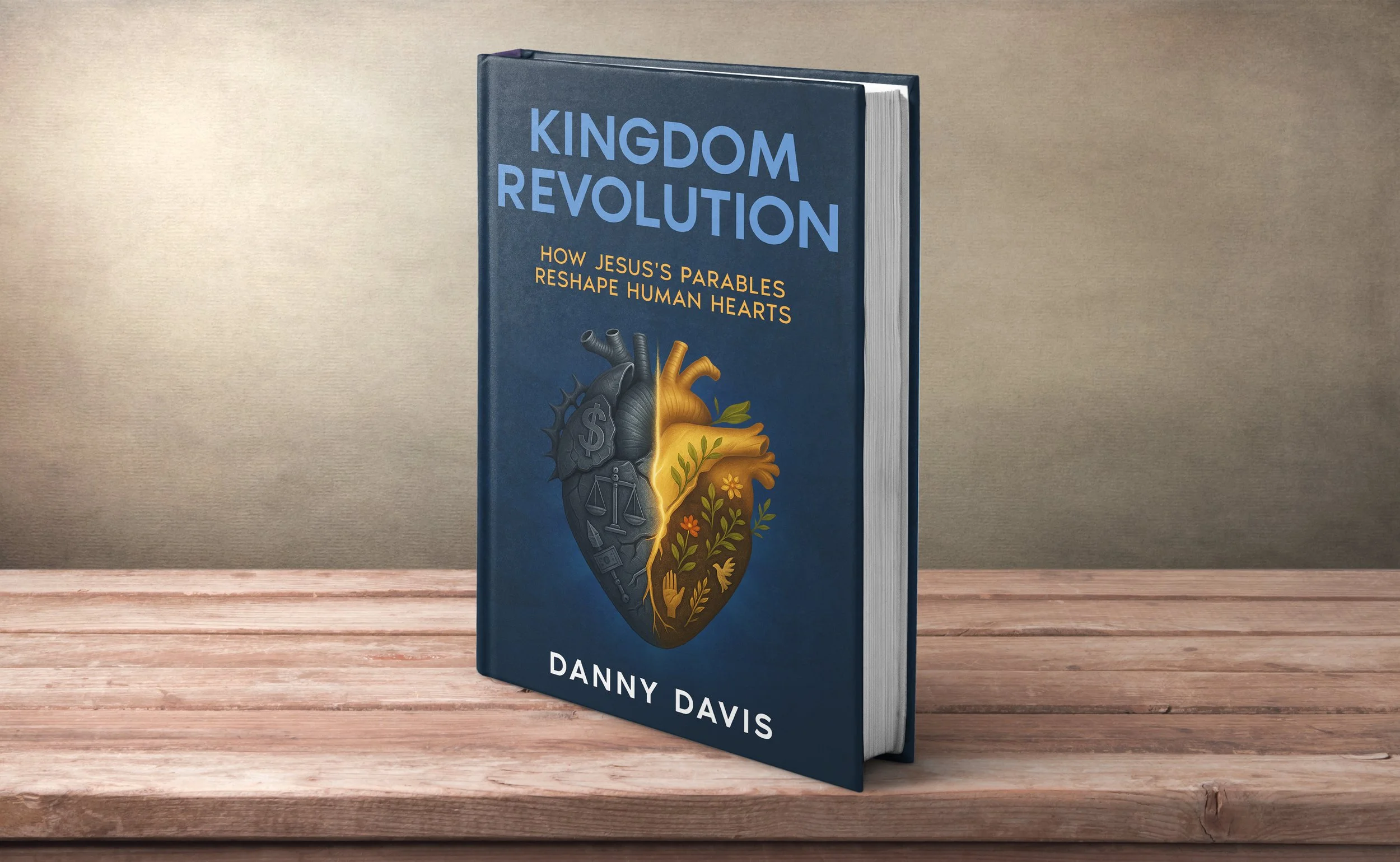
Click on the image to ORDER Kingdom Revolution (eBook, Paperback, and Hardcover) from Amazon today!!
Why the Habits That Work Everywhere Else Fail You Here
Every teaching habit you have was built somewhere else. Teach a Gospel and you trace a plot — first this happened, then that, then the tension broke. Teach an epistle and you trace an argument — a claim, a connector, a conclusion. Both habits are good. Both are earned. Both are the wrong tool for a psalm.
A psalm is not moving toward a conclusion. It is often circling something — grief, praise, doubt, longing — and doing it in verse, where meaning is carried by parallelism and repetition rather than by sequence. Ask a group "what happens next" in Psalm 42 and you will get silence, because nothing is happening in the narrative sense. Something is being felt, out loud, before God.
Name the problem precisely and half your work is done. Your group isn't confused about God. They're confused about genre. They've been handed a prayer and asked to treat it like a plot.
If you haven't nailed down your general lesson-prep method yet, start with our guide on how to create a Bible teaching — this post picks up from there and applies it specifically to the Psalms.
What Colossians 3:16 Tells You the Psalms Are Actually For
Here's the verse that should anchor everything you do with the Psalms:
"Let the message of Christ dwell among you richly as you teach and admonish one another with all wisdom through psalms, hymns, and songs from the Spirit, singing to God with gratitude in your hearts" (Colossians 3:16).
Notice what Paul actually asks for: not analysis, but teaching and admonition — carried by singing, praying, gratitude. The Psalms were never written to be dissected on a whiteboard. They were written to be prayed, sung, and carried into a room by someone who needed the words because they didn't have their own.
That distinction reframes the task. You're handing your group a script for prayer, not a lecture — one they'll keep using until the words stop sounding borrowed and start sounding like their own.
Five Questions to Ask Before You Teach Any Psalm
Before you build a discussion question, sit with the psalm yourself and ask these five questions. They will not hand you an outline. They will hand you entry points — the places where your group can actually take hold of the text.
Who Is Speaking, and to Whom?
Most psalms are prayers — the psalmist speaking to God, not about him. Some are instructional, the psalmist speaking to us (Psalm 1, Psalm 34). A few are God speaking to Israel (Psalm 81, Psalm 95). Before you teach it, settle this: is your group reading someone else's prayer over their shoulder, or being addressed directly? That decision determines whether your opening question is "what is the psalmist asking God for" or "what is God asking of us."
What Kind of Psalm Is This?
Lament, praise, thanksgiving, wisdom, royal, imprecatory — the genre is not decoration. It is instruction for how to read. A lament like Psalm 88 is allowed to end unresolved; don't manufacture a happy ending your group doesn't need you to invent. A wisdom psalm like Psalm 1 doesn't want to be prayed the way you'd pray a lament — it wants to be examined like a fork in the road. Name the genre out loud in the room. It gives your group permission to stop expecting a tidy pattern that isn't there.
Keep this close at hand while you prepare. Eight genres cover nearly every psalm you'll ever teach, and knowing which one you're in tells you what to expect before you read a single verse:
A psalm can lean on more than one of these at once — Psalm 73 is wisdom that turns into something close to lament. The table is a starting point for diagnosis, not a rulebook.
Where Does the Psalm Turn?
Many psalms hinge on a single verse — the place where confusion becomes clarity, or complaint becomes trust. Find it before you teach it. In Psalm 73, the turn arrives at verse 17: "till I entered the sanctuary of God; then I understood their final destiny." Everything before it is Asaph's envy of the wicked; everything after it is a reordered vision of what actually matters. Show your group the hinge and they will see the whole psalm move, rather than experiencing it as forty scattered verses.
What Word or Line Keeps Coming Back?
Hebrew poetry repeats for emphasis, not carelessness. Refrains carry weight — "His love endures forever," twenty-six times in Psalm 136; "Why, my soul, are you downcast?" three times across Psalms 42–43. Find the repetition and ask your group why the psalmist needed to say it more than once. Repetition in a psalm is rarely redundancy. It's usually a soul that hasn't convinced itself yet — and is preaching to itself until it does.
What Would It Cost Me to Pray This Honestly?
This is the question that turns a psalm from a text you cover into a prayer your group can pray. An imprecatory line like Psalm 137:9 will not let you stay comfortable, and it shouldn't. Ask your group what it would mean to bring their actual anger, actual grief, or actual gratitude to God in words this direct. A psalm you have not tried to pray, you have not yet taught.
Watching the Questions Work: Teaching Psalm 130 to a Room That's Never Sat With It
Take Psalm 130 into a small group that has never done this before. Ask the first question — who is speaking, to whom — and the answer surfaces fast: someone in the depths, speaking straight at God, verse 1. Ask the second — what kind of psalm is this — and you can name it together: a psalm of ascent, and a lament that moves toward hope.
Ask where it turns, and someone will find it: "I wait for the Lord, my whole being waits, and in his word I put my hope" (Psalm 130:5) — the pivot from crying out to actively waiting. Ask what repeats, and someone will notice "wait" doing double duty in verses 5–6, alongside the watchman image named twice — a man staring at the horizon for a dawn he cannot make come faster.
Ask what it would cost to pray it honestly, and the room goes quiet in a different way than it did at the start. Not blank. Attentive.
What Changes When You Stop Explaining and Start Praying It With Them
When you learn to teach the Psalms this way, something shifts in the room besides comprehension. You stop being the explainer and start being the guide who leads people back into their own prayer life. A group that has learned to ask these five questions of one psalm can ask them of any psalm — in personal devotion, at a hospital bedside, on a Tuesday that has gone sideways. You have not just taught a text. You have handed them a method they will use long after they've forgotten your outline.
A Pastoral Word from Thirty Years of Ministry
In more than thirty years of pastoral ministry — in stateside churches and now among believers in Africa who often don't share the West's plot-driven habits of Bible study but have sung the psalms their whole lives — I have watched this shift happen again and again. The moment a group stops asking "what does this psalm mean" and starts asking "what is this psalm doing to me as I pray it," the room changes. People who felt like spectators become participants. The Psalms were never meant to be admired from a safe distance. They were meant to be prayed until they became yours.
The Craft Itself Is an Act of Faithfulness
Your calling was never to entertain a room for an hour — it was to hand people language for the parts of their life that don't have words yet: the grief, the gratitude, the fury, the hope that outlasts the evidence. That is not a small thing. That is discipleship at its most durable, because a person who has learned to pray a lament will still know how to pray it long after they've forgotten your Sunday morning.
2 Timothy 2:2 calls us to entrust what we've learned to reliable people who will also be qualified to teach others — and few things are more worth entrusting than the ability to open a psalm and know exactly what to do with it. Teach the craft well, and you are not just leading one Bible study. You are multiplying people who can lead the next one.
If you want a fuller method for building any Bible lesson from the ground up, start with our guide on How to Create a Bible Teaching.
And if you're just getting oriented to teaching the Bible well, our Start Here page is the best place to begin.
——
FYI: Some of the links above are affiliate links. If you choose to purchase items linked, I will receive a small commission from that sale.
If you find this blog helpful and want to say thanks, click here to buy Danny Davis a coffee.
