

How to Study Bible Prophecy Without Getting Lost in Details
The Passage That Turns into a Puzzle
You open Revelation looking for hope and end up building a chart.
It starts innocently enough. You want to know what the Bible says about the future, so you turn to Daniel or Revelation, maybe Ezekiel or Zechariah. Within ten verses you meet a beast with ten horns, a woman clothed with the sun, a number everyone argues about, and a timeline that four different websites explain four different ways. You start cross-referencing. You start Googling. Two hours later you know more about competing millennial views than you knew when you sat down, and you have not prayed once.
Sound familiar? You are not failing at prophecy. You were never given a method for it.
Most Christians were taught to study a psalm, a parable, even a genealogy with some kind of process — read it in context, ask what it meant to the original audience, look for repetition. Then they hit a prophetic vision and the process disappears. Suddenly it is chart-building, symbol-decoding, and picking a side in a debate that has run for two thousand years. No wonder so many believers either avoid prophecy altogether or treat it like a treasure hunt for secret codes. Both responses skip the same step: learning how a prophetic vision is built, and what it is asking of you before you touch a single detail.
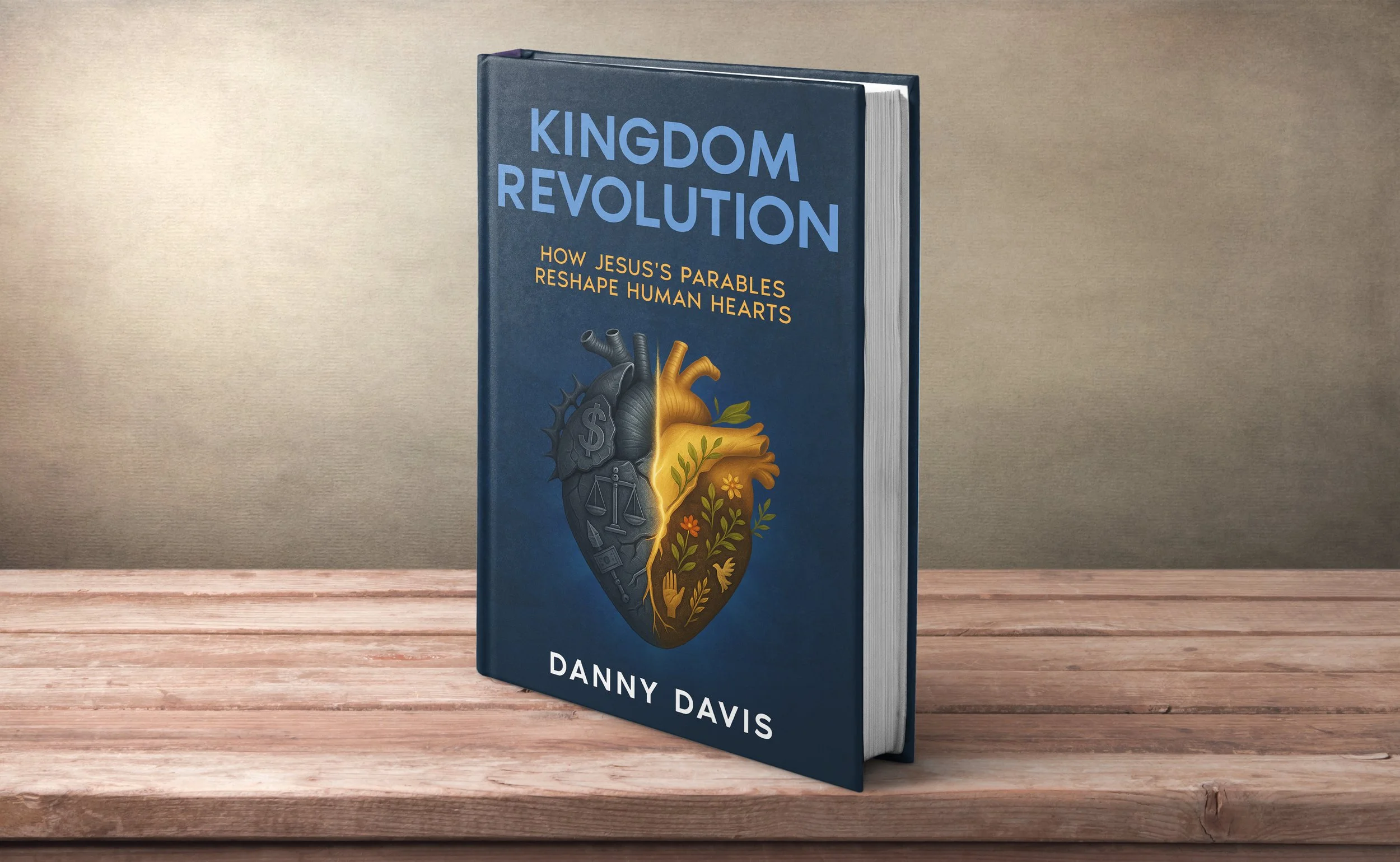
Click on the image to ORDER Kingdom Revolution (eBook, Paperback, and Hardcover) from Amazon today!!
Why Detail-First Prophecy Study Always Breaks Down
Here's the problem, named precisely: prophetic literature gives you the details and the meaning in the same breath, but not in the order you expect. You expect to work from the parts to the whole — decode this beast, translate that number, and eventually the picture will emerge. Scripture usually does the opposite. It gives you the whole first, often in the same chapter, and expects the details to be read in light of it.
Skip that order and you will chase details forever. You will spend weeks deciding whether a horn represents a person or an empire, all while missing the one sentence the text handed you for free: this is what the vision means. Prophecy study does not fail because readers lack information. It fails because readers start reading at the wrong altitude — zoomed all the way into the tenth horn before they have looked at the shape of the whole beast.
The Anchor That Keeps You Oriented: Daniel 7
Daniel 7 is the clearest place in Scripture to learn this, because Daniel does the hard work for you. He sees four beasts rise out of a churning sea — a lion, a bear, a leopard, and a fourth beast "dreadful and terrible" with iron teeth and ten horns (Daniel 7:2-7). Then a horn "with eyes like the eyes of a man" speaks great things, a court convenes, and one like a son of man is given dominion (Daniel 7:8-14). It is exactly the kind of passage that sends readers straight into chart-building.
But look at what happens next. Daniel does not start guessing. He asks someone who knows (Daniel 7:16). And the interpreting angel gives him the whole picture before a single detail is unpacked: "These four great beasts are four kings who shall arise out of the earth. But the saints of the Most High shall receive the kingdom and possess the kingdom forever" (Daniel 7:17-18).
Read that again. Before Daniel is told one thing about the ten horns, the little horn, or the timing of any of it, he is told how the story ends: the kingdom belongs to God's people, forever. Everything that follows in the chapter — the little horn, the boasting, the judgment — is detail added to a picture Daniel already has the outline of. That is the order. Whole, then part. Not part, then whole.
Four Shifts That Keep the Details from Swallowing You
You do not need a decoder ring for prophecy. You need to change the order in which you ask your questions. These four shifts, taken together, keep the details in their place — useful, even fascinating, but never in charge of your interpretation.
Shift One — From Symbol to Shape
Before you ask what any single image means, ask what shape the whole vision has. Daniel 7 has a shape: four beasts rise, one is judged, dominion is given to "one like a son of man" and to "the saints of the Most High." Find that shape first. It is usually stated somewhere in the passage — in an interpreting angel's summary, in the prophet's own conclusion, in a refrain that repeats. Only once you can state the shape in one sentence should you turn to what any single symbol contributes to it.
Shift Two — From Certainty to Category
Ask what kind of statement you are looking at before you ask what it means. Some prophecy is conditional, tied to a response ("if you repent…"); some is unconditional, a promise God binds himself to regardless of the response. Some has already been interpreted for you within the passage; some is left symbolic on purpose. Forcing every image toward the same kind of certainty — either "this is definitely literal" or "this is definitely symbolic" — is how careful readers end up defending positions the text never asked them to take.
Shift Three — From One Verse to the Whole Unit
A prophetic vision is a single unit of thought, even when it runs for an entire chapter. Reading verse 8 in isolation from verses 1 through 14 will always mislead you, because the detail in verse 8 was never meant to stand alone. Read the entire vision in one sitting before you stop to interpret any piece of it. Let the ending inform your reading of the beginning.
Shift Four — From Curiosity to Confession
Ask what response the passage is asking for. Daniel's own reaction to his vision was not a chart. It was trouble of heart that he "kept... in his heart" (Daniel 7:28) — sober reflection, not certainty on parade. Revelation makes the purpose explicit: "Blessed is the one who reads aloud the words of this prophecy... for the time is near" (Revelation 1:3). The blessing attached to prophecy is never intellectual mastery. It is worship, watchfulness, and hope. If your prophecy study is not moving you toward any of those three, you have gathered information without doing the thing prophecy was written for.
Watching the Shifts Work on Daniel 7
Here is what this looks like on the actual page. Read Daniel 7 in full first — resist the pull to stop at verse 8. Notice the refrain: four beasts, one court, one son of man given dominion. State the shape in a sentence: earthly kingdoms rise and fall in succession, but God installs a kingdom that cannot be shaken and gives it to his people. That sentence is Shift One, and you now have it before you have decided what a single horn means.
Now apply Shift Two. The angel already interpreted the beasts as kings and kingdoms (Daniel 7:17) — that part is not left symbolic for you to guess at. But the little horn's exact identity was debated even by ancient interpreters, and Scripture does not resolve every detail with the same certainty it gave the main shape. That is not a failure of the text. It is the text telling you where to hold confidence and where to hold your conclusions loosely.
Apply Shift Three by reading verses 19 through 27 as commentary on the vision you already read whole, not as a new puzzle. The little horn's boasting, the "time, times, and half a time," the final judgment — every detail here is explaining a piece of the picture you can already state in one sentence. You are not starting from zero. You are filling in a shape you already own.
And Shift Four asks what Daniel does with all of this. He does not publish a timeline. Daniel 7:28 says his thoughts "greatly troubled" him and he kept the matter in his heart. If the man who received the vision directly did not walk away with a settled chart, you can release yourself from the pressure to produce one either. You can walk away instead with what he had: a settled confidence about who wins, and a sober watchfulness about how you live until then.
What Changes When You Read Prophecy This Way
Nothing about the difficulty of the text changes. Daniel 7 is still strange. The horns are still debated. What changes is your posture toward the strangeness. You are no longer trying to out-argue every commentary or defend a chart against every objection. You are reading the way Daniel himself modeled — asking for the whole first, holding the details in their proper place, and letting the vision produce worship instead of anxiety.
A Pastoral Word from Thirty Years of Ministry
In more than thirty years of ministry, I have sat with believers who set dates, who sold possessions, who built entire spiritual lives around a decoded number or a matched-up headline, and then had to rebuild their faith when the date passed and the headline faded. I have also watched the opposite happen: believers so afraid of getting prophecy wrong that they stopped reading Daniel and Revelation altogether, leaving an entire portion of God's Word unopened out of fear. Neither group needed more warnings about false teachers. They needed a method — a way to hold the whole and the details in the right order, so the text could do what God intended it to do: strengthen hope, not manufacture certainty it never promised.
Go Back to Your Bible
Open one prophetic passage this week — Daniel 7, or a chapter of Revelation you have been avoiding — and read the whole unit before you touch a single detail. State its shape in one sentence before you look anything up. Then ask what it is asking you to do: worship, watch, or wait. That is the method. Everything else is commentary on it.
For a fuller foundation in reading any passage this way, see our Inductive Bible Study Method — the approach underneath every method taught in this series. And if you are just getting started studying Scripture with any consistency,
Start Here is built for exactly that.
——
FYI: Some of the links above are affiliate links. If you choose to purchase items linked, I will receive a small commission from that sale.
If you find this blog helpful and want to say thanks, click here to buy Danny Davis a coffee.
