

How to Study a Parable: What Jesus's Stories Demand of You
The Story You Nodded Along To Until It Turned
"Wait, which one are we supposed to be in this story?"
Someone in your small group asks it, and the question lands in the middle of a parable everyone in the room could already recite from memory. Nobody answers right away. The room goes quiet.
Most of you have simply spent years mining parables for a moral, a principle, a takeaway, reading them as information about a truth. A parable is built to be walked into.
That gap between what you did with the story and what the story was designed to do to you is where most parable study quietly fails.
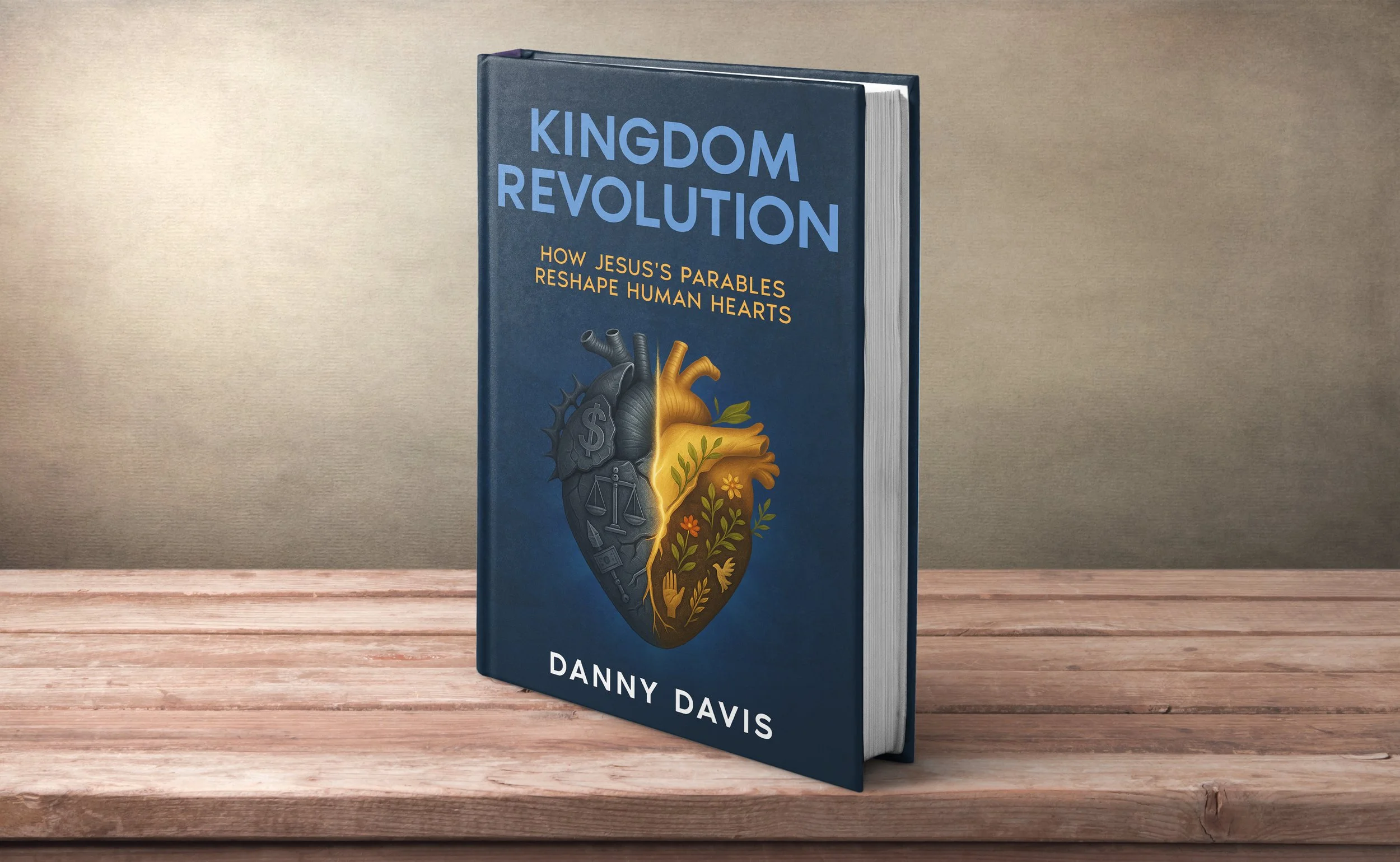
Click on the image to ORDER Kingdom Revolution (eBook, Paperback, and Hardcover) from Amazon today!!
Why "What's the Lesson?" Is the Wrong First Question
Ask ten well-meaning Bible study guides how to study a parable and you'll get some version of the same seven moves: read it carefully, consider the historical context, find the main point, note the symbolism, don't over-allegorize the details, cross-reference other verses, land on an application. All true. None of it is wrong, exactly.
But notice what every one of those steps assumes: that a parable is content to be processed. Read it, extract it, apply it. This approach works for a paragraph of Paul's argument in Romans. Jesus told stories differently.
Here's the gap the standard advice never names: a parable works less like a container for a truth and more like a trap for the truth about you. Jesus told parables so people would leave changed, or leave offended, and either reaction told you exactly where you stood. Reading one well takes a method built for address, not analysis alone.
The Anchor Text: When a Parable Became a Verdict (2 Samuel 12:1-7)
Long before Jesus opened his mouth in Galilee, the pattern was already set. Nathan comes to David, a king who has just arranged a man's death to cover an affair, and instead of leveling an accusation, he tells him a story.
A rich man with many flocks. A poor man with one little ewe lamb, "which he had bought and reared, and which had grown up with him and his children. It used to eat of his morsel and drink from his cup and lie in his arms, and it was like a daughter to him" (2 Samuel 12:3). A traveler visits the rich man, who, rather than take from his own abundance, seizes the poor man's lamb and serves it to his guest.
David's anger burns (12:5). He pronounces the rich man deserving of death. And Nathan says four words that collapse whatever distance David thought separated him from the story: "You are the man!" (12:7).
A parable at its best works exactly this way: it draws a verdict out of you, then hands that verdict back with your own name on it. A method for studying a parable that skips that moment has stopped studying what Jesus was doing.
A Parable Is a Door You Walk Through
Most Bible teaching works like a window: you look through it and see a truth clearly on the other side. A parable works more like a door. It looks unremarkable from where you're standing, and you don't feel anything crossing the threshold. But a few steps in, the room rearranges around you, and you discover the story was about you, the one who walked in.
Every well-built parable moves you through the same five thresholds. Learn to notice them and you have a repeatable way to study any parable in the Gospels, the familiar ones and the overlooked ones alike.
The First Threshold: The Ordinary Surface
Every parable opens in a world you recognize: a farmer sowing seed, a woman losing a coin, a king settling accounts, a father with two sons. Everything here reads like ordinary life. That's deliberate. Jesus disarms you with the familiar before he does anything else. Stay with this threshold before you go looking for a "deeper" meaning. The ordinariness is the invitation. It's why you walk in with your guard down.
The Second Threshold: The Turn
Somewhere in the middle, the story bends in a direction the ordinary world wouldn't bend. The father runs. The vineyard owner pays the last worker the same as the first. The Samaritan, of all people, stops. This is the hinge of the whole parable, and it's usually the detail a rushed reading skips past fastest, because it's the part that makes you uncomfortable rather than the part that makes you nod.
The Third Threshold: The Mirror
This is often where study stops short. The turn in the story doubles as a mirror, angled back at you. Ask directly: who in this story is behaving the way I have actually behaved this year? Name the character the details fit, even when it isn't the one you'd like to identify with.
The Fourth Threshold: The Verdict
Like David, you will already have an opinion about the characters before you realize the story includes you. Name that opinion out loud. What do you think the rich man deserves? What do you think the older brother owes? That verdict matters: it's the parable extracting your own moral instincts so it can turn them back on you.
The Fifth Threshold: The Door Back Out
A parable finishes its work in your week, not only in your head. The last threshold hands you one specific, nameable change to carry back into your week, something concrete enough to point to by Friday.
Walking Through the Thresholds: The Unforgiving Servant (Matthew 18:23-35)
Take the parable Jesus tells right after Peter asks how many times he must forgive his brother (Matthew 18:21-22).
The ordinary surface: A king settles accounts with his servants. Utterly mundane bureaucracy, until one servant owes ten thousand talents, a debt so large the number itself is the first clue you're not meant to take this literally. It's roughly what a day laborer would earn in over 150,000 years.
The turn: The king doesn't just extend the payment schedule. He cancels the entire debt (18:27). This is the bend: mercy on a scale the story world doesn't normally allow.
The mirror: That same servant walks out, finds a man who owes him roughly three months' wages, and has him thrown into prison (18:28-30). Ask the question directly: when has forgiveness received failed to become forgiveness extended in your own life? Where has someone's small debt to you loomed larger than the canceled debt you were just standing under?
The verdict: "When his fellow servants saw what had taken place, they were greatly distressed" (18:31). You feel that distress too, reading it. Good — that's your own moral instinct rendering judgment, exactly the way David's did.
The door back out: Jesus turns the feeling into an assignment. "So also my heavenly Father will do to every one of you, if you do not forgive your brother from your heart" (18:35). The parable is asking who specifically you still need to forgive, and inviting you to make this the week you go to them.
What Changes When You Stop Mining and Start Walking In
In more than thirty years of pastoral ministry, I have watched more people quote the parable of the prodigal son than I have watched people actually go home. It's simply what happens when a story gets treated as inspiration rather than address. Obeying a parable takes you further than explaining one ever will.
The Bereans in Acts 17:11 "examined the Scriptures every day" because they understood that Scripture was making a claim on them, one that called for daily, disciplined attention. A parable asks the same of you: method that matches your admiration.
This is the same shift I spend a whole book walking through, all twelve of Jesus's parables, including the prodigal son, the vineyard workers, and the Good Samaritan, read as the transformation engines they were built to be rather than safe Sunday lessons. If this approach is landing for you, Kingdom Revolution: How Jesus's Parables Reshape the Human Heart goes further than one blog post can.
A Pastoral Word
If your last parable study ended with a nice insight and nothing else, there's no need to feel behind. It likely just means you stopped at the third threshold, the mirror, right before the parable could finish its work. The insight was only ever a waypoint. You were the destination.
Go Back to Your Bible
Open one Gospel parable today, Luke 15, Luke 18, Matthew 20, wherever you are, and walk it through the five thresholds. When you reach the mirror, ask the question honestly: who in the story do you resemble this year? Then carry the fifth threshold all the way through, and name one specific thing you'll do differently by Friday.
If you want the fuller method behind this, how to slow down and observe a passage before you interpret or apply it, start with our foundational guide:
The Inductive Bible Study Method
And if you're building a regular rhythm of study, Start Here
——
FYI: Some of the links above are affiliate links. If you choose to purchase items linked, I will receive a small commission from that sale.
If you find this blog helpful and want to say thanks, click here to buy Danny Davis a coffee.
