
Putting It All Together: Your Complete Scripture Memory System
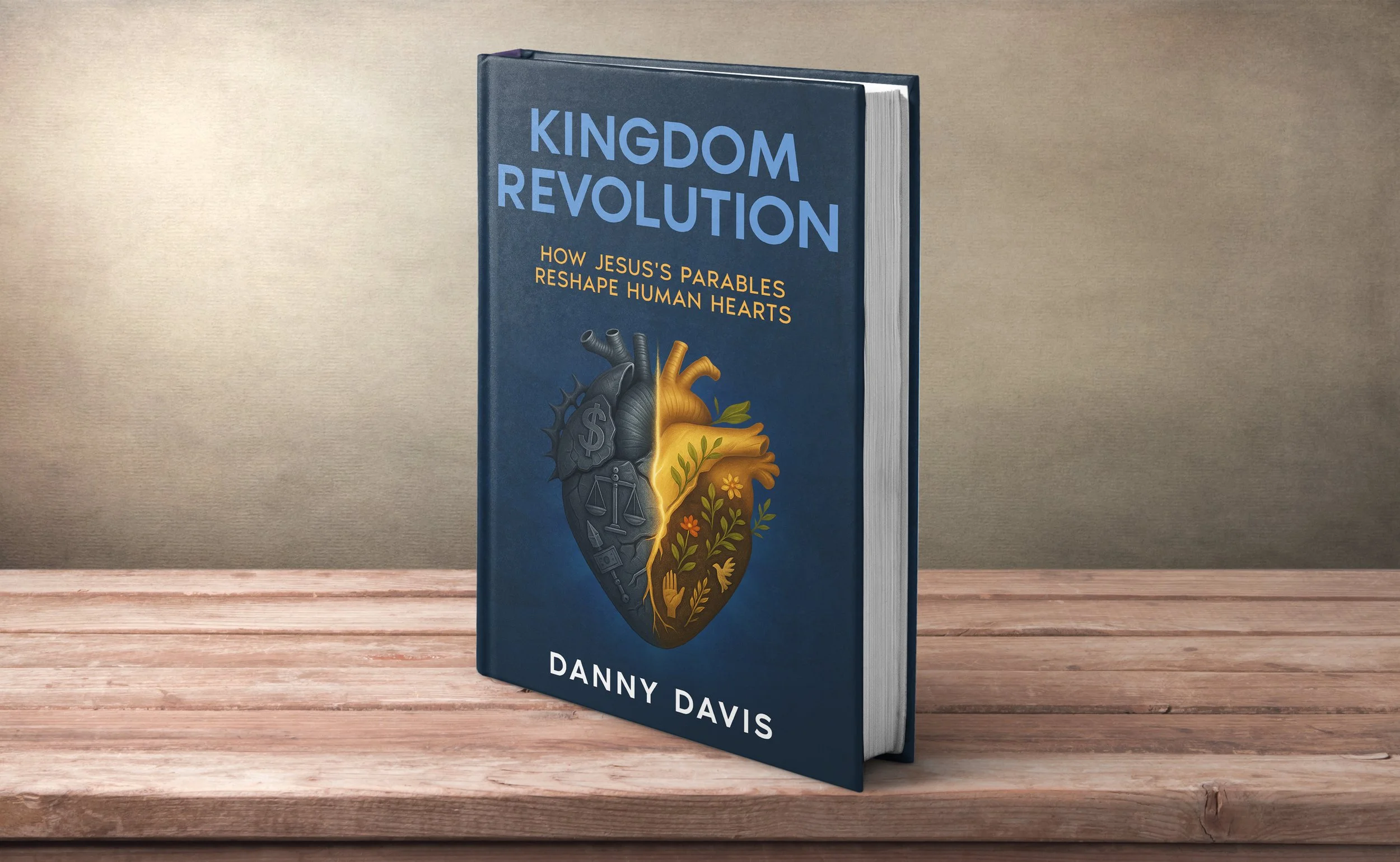
Click on the image to ORDER Kingdom Revolution (eBook & Paperback) from Amazon today!!
You know why you forget. You know the four brain hacks that make Scripture stick. Now comes the part where theory becomes practice.
This is where most people stumble. They read about spaced repetition and active recall, think “That makes sense,” and then open their Bible tomorrow morning with no idea how to start. The gap between understanding a technique and using it is where good intentions go to die.
I don’t want that to happen to you.
So this week, I’m giving you something concrete: a complete, step-by-step system you can implement starting today. Not theory. Not concepts. An exact workflow with real examples, practical tools, and everything you need to make these brain hacks work in your life.
By the end of this post, you’ll know exactly what to do when you sit down with your Bible tomorrow morning.

ORDER MY NEW BOOK TODAY FOR $9.99 (eBook)
The Foundation: Setting Up Your System
Before we dive into the workflow, you need to decide on your tools. The most effective memory system is the one you use consistently. Some people love technology. Others prefer pen and paper. Both work. Pick what feels sustainable for you.
Option 1: The Analog System
What You Need:
Index cards (3x5 or 4x6)
A small box or accordion folder
Dividers labeled: Daily, Day 3, Day 7, Day 14, Day 30+
A pen
How It Works:
You write each verse reference on one side of a card. On the back, you add your notes, observations, and personal applications. As you review, you move cards forward through the dividers based on the spaced repetition schedule.
Why This Works:
Writing by hand engages your brain differently than typing. The physical act of moving cards forward creates a sense of progress. You’re not dependent on apps or technology.
Scroll Down for Free Analog Resources
〰️
Scroll Down for Free Analog Resources 〰️
Option 2: The Digital System
What You Need:
Anki (free, powerful, slightly technical) or RememberMe (paid, user-friendly, designed for Christians)
Your phone, tablet, or computer
How It Works:
You create digital flashcards with the verse on one side and your notes on the other. The app automatically schedules reviews based on spaced repetition algorithms. You review on your phone during downtime.
Why This Works:
The app handles all the scheduling. You can review anywhere. You can add images, audio recordings, and formatting. The system tracks your progress and adjusts automatically.
My Recommendation
If you’re unsure, begin with the analog system. It’s tactile, simple, and doesn’t require learning new software. You can always transition to digital later if you want. The method matters more than the medium.
The Core Workflow: Your Bible Study Session
Here’s the exact process I use. This combines all four brain hacks into one cohesive workflow. I’ll walk through it with a real passage: Philippians 4:6-7.
Step 1: Read With Full Attention (5 minutes)
First, create space for focus. Put your phone in another room. Close unnecessary tabs. If you’re reading early in the morning and your brain is still foggy, maybe splash some water on your face first.
Now read the passage slowly. Not skimming. Not rushing to “get through” a chapter. Read it as if someone you love had written you a letter, and you want to catch every word.
“Do not be anxious about anything, but in every situation, by prayer and petition, with thanksgiving, present your requests to God. And the peace of God, which transcends all understanding, will guard your hearts and your minds in Christ Jesus.” (Philippians 4:6-7).
Read it three times. Let the words land. Don’t move forward until you’ve given this passage your full attention.
Step 2: Chunk and Connect (5 minutes)
Now ask yourself: “What are the main ideas here?”
For Philippians 4:6-7, I see three chunks:
Don’t be anxious (command)
Pray with thanksgiving instead (action)
God’s peace will guard you (promise)
Write these down. Use your own words. Make it personal.
Next, connect each chunk to your life. This is critical. When have you felt anxious? When have you experienced God’s peace? What situation right now makes this verse relevant?
For me, I connected this verse to my Parkinson’s diagnosis. The anxiety about my future. The times I’ve prayed and felt that inexplicable peace. The reminder that God’s peace doesn’t make logical sense, but it’s real.
Write those connections down. This is how the verse becomes yours instead of just words on a page.
Step 3: Engage Multiple Senses (5 minutes)
Don’t skip this. It feels optional, but this is where the magic happens.
Auditory: Read the verse aloud. Hear your own voice saying these words. Notice which phrases stand out when spoken.
Kinesthetic: Write the verse by hand. Feel the pen move across paper. Write slowly enough that you’re thinking about each word.
Visual: Close your eyes. Picture what this verse describes. What does anxiety look like in your mind? What does peace look like? What does God’s guarding presence look like? Let your imagination engage with the text.
Emotional: Sit with the feeling. Remember a moment when you felt deep anxiety. Remember a moment when you felt deep peace. Connect those emotions to this passage.
This isn’t busy work. Every sense creates a neural pathway. Every emotional connection creates another anchor. When you need this verse later, your brain will have multiple ways to access it.
Step 4: Active Recall (3 minutes)
Close your Bible. Put your notes face down.
Now try to recall the verse. Don’t aim for perfection. Just try.
Can you remember the reference? Can you remember the main chunks? Can you recite any of the wording?
Write down what you remember without looking. This struggle to retrieve information is where learning happens. Your brain is working. Neural pathways are strengthening.
Now check your work. What did you miss? Those gaps are exactly what your brain needs to focus on during your next review.
Step 5: Create Your Review Card (2 minutes)
Take an index card (or open your app).
Front of card:
Reference: Philippians 4:6-7
Memory cue: “The Anxiety Antidote”
Back of card:
The three chunks in your own words
Your personal connection
One question to ask yourself: “Where am I anxious right now? Have I brought it to God with thanksgiving?”
Place this card in your “Daily” section. Tomorrow, you’ll review it.
Total time for this workflow: 20 minutes
Twenty minutes. That’s all. You’ve employed spaced repetition, active recall, chunking, and multisensory learning. You’ve given your brain everything it needs to hold onto this passage.
The Review Schedule: Making It Stick
The initial study session is only the beginning. Here’s what happens next.
Day 1 (Tomorrow)
Pull out your card. Before looking at the back, try to recall:
What’s the verse about?
What are the three main chunks?
How does it connect to your life?
Then flip the card over. Check your recall. Read the verse again in your Bible. Spend 2-3 minutes with it.
Move the card to your “Day 3” section.
Day 3
Same process. Try to recall before looking. Check your work. Spend 2-3 minutes reviewing.
Notice what’s happening: you’re not cramming. You’re reviewing right before you’re about to forget. This is the sweet spot where learning happens.
Move the card to “Day 7.”
Day 7
Pull it out. Try to recall. By now, it should be getting easier. The verse is moving into long-term memory.
Spend 2-3 minutes. Add any new observations. Maybe this verse spoke to you differently this week because something changed in your life.
Move to “Day 14.”
Day 14
Review again. Same process. By now, the verse should feel familiar. You should be able to recall the main ideas easily.
Move to “Day 30+.”
Day 30 and Beyond
This is your final review. If you can recall it now, it’s yours. It’s lodged in long-term memory.
Some people review once more at 60 or 90 days just to be sure. Others find that once is enough. Do what works for you.
Key principle: Each review takes 2-3 minutes. That’s all. You’re not re-studying the passage. You’re reminding your brain that this matters.
A Real-Life Example: One Week With This System
Let me show you what this looks like over the course of a week.
Monday Morning
You study Philippians 4:6-7 using the 20-minute workflow. You create your review card. You place it in “Daily.”
Time spent: 20 minutes
Tuesday Morning
You pull out yesterday’s card. You try to recall it before looking. You spend 3 minutes reviewing. You move it to “Day 3.”
Then you study a new passage: Psalm 46:10. You do the full 20-minute workflow. You create a new card. You place it in “Daily.”
Time spent: 23 minutes total.
Wednesday Morning
You review Psalm 46:10 (your Day 1 card). You move it to “Day 3.”
You study a new passage: Romans 8:28. Full workflow. New card.
Time spent: 23 minutes
Thursday Morning
You now have two Day 3 cards: Philippians 4:6-7 and Psalm 46:10. Review both (6 minutes total).
You study a new passage: James 1:2-4. Full workflow.
Time spent: 26 minutes
By Sunday
You have seven passages in your system at various stages. Some are on Day 1. Some on Day 3. One is on Day 7. Your morning routine takes 25-30 minutes, consisting of reviewing your scheduled cards and studying one new passage.
And here’s what’s remarkable: you now have seven passages moving into long-term memory. Not just read. Not just highlighted. Truly embedded in your mind in a way they’ve never been before.
Troubleshooting Common Obstacles
“I Don’t Have 20 Minutes Every Morning”
That’s fair. Life is demanding. Here are your options:
Option 1: Do the full workflow three times a week instead of daily. Study three passages per week instead of seven. Slower progress is still progress.
Option 2: Shorten the workflow to 10 minutes. Read the passage (3 minutes), chunk and connect (3 minutes), write it by hand (2 minutes), recall without looking (2 minutes). It’s not as thorough, but it still works.
Option 3: Split the workflow. Study the passage in the morning (10 minutes). Review it in the evening (10 minutes).
The goal isn’t perfection. The goal is consistency. A shorter routine you do consistently beats a perfect routine you abandon after two weeks.
“I Keep Forgetting to Review My Cards”
This happens. Here’s the fix: attach your review routine to something you already do consistently.
Do you drink coffee every morning? Keep your card box next to the coffee maker. Review while the coffee brews.
Do you have a commute? Keep your cards in your car or bag. Review at red lights or on the train.
Do you scroll social media before bed? Put your card box on your nightstand. Review before you pick up your phone.
Habit stacking works. Connect your new routine to an existing habit.
“I’m Forgetting Verses Even With This System”
First, that’s normal. Don’t panic. Some verses take longer to stick than others. Here’s what to do:
Check your attention: Are you reviewing while distracted? If your mind is elsewhere, your brain isn’t encoding the information. Give it focused attention.
Add more sensory engagement: Maybe you’re skipping the multisensory step. Go back and engage more senses. Say it aloud. Write it by hand. Visualize it.
Make it more personal: Perhaps the verse hasn’t resonated with your life yet. Ask yourself: “When would I need this? What situation makes this relevant?” Create that emotional connection.
Review more frequently: If a verse keeps slipping away, don’t move it forward in your system yet. Keep it in an earlier review stage until it solidifies.
“This Feels Mechanical. Where’s the Spiritual Connection?”
I get this objection. It can feel clinical, like you’re treating Scripture like any other information to memorize.
Here’s what I’d say: these techniques don’t replace the Holy Spirit. They create space for the Holy Spirit to work. When you engage deeply with a passage, meditating on it over days and weeks, and connecting it to your life, you’re doing exactly what Psalm 1 describes: meditating on God’s Word day and night.
The method is mechanical. But the result is deeply spiritual. When that verse you’ve embedded rises to the surface in a moment of crisis, when you hear God speaking through Scripture you’ve hidden in your heart, when you find yourself praying a passage you memorized weeks ago, that’s the Holy Spirit using what you’ve stored.
Don’t confuse the tool with the outcome. The system is just a tool. The outcome is transformation.
Your Next Steps
You’ve read all three parts of this series. You understand why you forget, you know the four brain hacks, and now you have a complete system for implementation.
So what happens next?
Here’s my challenge to you: commit to 30 days.
Pick one verse this week. Go through the 20-minute workflow. Create your review card. Follow the schedule for 30 days.
Just one verse. Don’t try to memorize the entire Bible in a month. Start small. Prove to yourself that this works.
By day 30, that verse will be yours. It will be lodged in your memory in a way it never has been before. You’ll be able to recall it when you need it. You’ll have proven to yourself that your brain is fully capable of holding onto Scripture.
And that success will open the door to everything else.
Because here’s what I know: once you successfully embed one verse using this system, you’ll want to do it again. And again. And six months from now, you’ll have a dozen passages at your fingertips. A year from now, you’ll have fifty. Five years from now, you’ll have internalized more Scripture than you ever thought possible.
The Downloadable Tools
I want to make this as easy as possible for you. So I’ve created a few resources you can download and use starting today:
The Scripture Memory Tracking Sheet: A simple printable PDF where you track which verses are in which stage of review. No more guessing which cards to pull each morning.
The Index Card Template: Print these on cardstock, cut them out, and you have pre-formatted cards ready to use. The front side has space for reference and memory cues. The back side has space for chunks, connections, and reflection questions.
The 30-Day Challenge Guide: A day-by-day companion that walks you through your first month using this system. Includes encouragement, troubleshooting tips, and suggested passages to start with.
The Review Schedule Reminder: A one-page visual guide showing exactly when to review each card. Stick it on your wall or inside your Bible as a quick reference.
One Final Encouragement
If you’re feeling overwhelmed right now, that’s okay. This system may seem overwhelming at first. New habits always do.
But here’s what I want you to remember: you don’t have to do this perfectly. You just have to start.
Start with one verse. Give yourself permission to stumble. Give yourself permission to miss a review day and pick up where you left off. Give yourself permission to modify the system to fit your life.
The techniques are proven. The neuroscience is sound. But the most important factor is you showing up consistently and doing something.
Imperfect action beats perfect inaction every single time.
You’ve spent three weeks reading this series. You’ve invested time understanding how your brain works and what techniques make Scripture stick. Don’t let that investment go to waste.
Pick your first verse. Set up your system. Start tomorrow morning.
Thirty days from now, you’ll be glad you started today.
The Promise of Scripture
There’s a reason you wanted to remember Scripture in the first place. It’s not about cognitive achievement. It’s not about impressing anyone at Bible study.
You want to remember because you know God’s Word has power. You know it transforms. You know it guides, comforts, challenges, and changes us.
And here’s the truth: when Scripture stays with you, when it’s embedded so deeply that it rises to the surface in moments of need, something shifts. It’s no longer just information. It becomes an integral part of how you think, how you pray, and how you navigate life.
That’s the promise. That’s what’s waiting for you on the other side of these techniques.
God’s Word will not return empty. But it has to stay with you long enough to do its work.
Now you know how to make that happen.
Go. Start. Give it 30 days.
I believe your brain is fully capable of holding onto Scripture. I believe these techniques will work for you just as they have for thousands of others.
The only question left is: will you begin?
——
FYI: Some of the links above are affiliate links. If you choose to purchase items linked, I will receive a small commission from that sale.
If you find this blog helpful and want to say thanks, click here to buy Danny Davis a coffee.
