

Finding Hope in the Ruins: When God’s Faithfulness Shines Brightest in the Dark
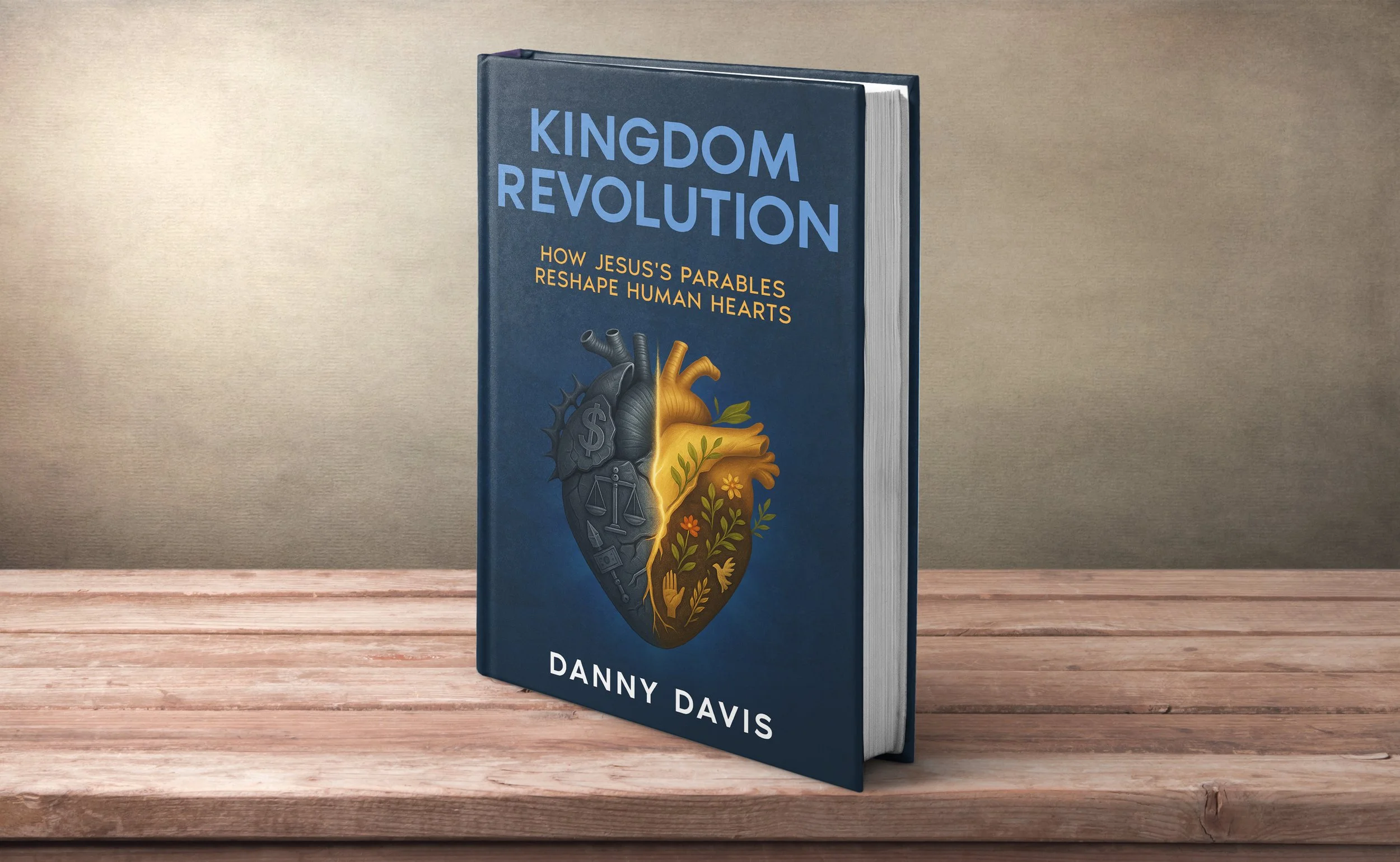
Click on the image to PRE-ORDER Kingdom Revolution (eBook) from Amazon for $0.99 today!!
When Everything Falls Apart: A Biblical Guide to Hope Through Lamentations
Netflix has asked “Are you still watching?” twice now, and your phone shows seventeen different news articles you’ve scrolled past without reading. The blue glow from the screen hurts your eyes, but the alternative—lying in complete darkness with your thoughts—feels worse.
Six months since the divorce papers. Four months since dad’s funeral. Two months since the company “restructured” your position away. Your phone sits silent—no concerned texts, no check-ins. Even close friends seem to have moved on while you’re still sitting in the wreckage.
You’ve tried the Christian responses. Claimed Romans 8:28. Quoted Jeremiah 29:11. Sung “It Is Well” until the words felt hollow. But tonight, those verses feel like band-aids on a severed artery.
Then you remember reading something recently about divine hiddenness. Maybe God isn’t absent. Maybe he’s just... hidden. But what comfort is that when you can’t pay rent and your kids keep asking why Daddy doesn’t live here anymore?
What if I told you that the very Bible verses we turn to for comfort were written by someone in an even darker place than your sleepless night? Someone who found hope not by escaping his pit, but by discovering something unshakeable at the bottom of it?
Here’s something that might surprise you. In Part 1, we learned God gives us permission to fall apart. In Part 2, we saw that sometimes God Himself breaks us. Now here’s why: real hope only grows when we stop pretending our pain doesn’t exist. This is what it looks like to find God when everything falls apart—not by pretending things aren’t broken, but by discovering that God’s character remains unbroken even when everything else shatters.

ORDER MY NEW BOOK TODAY FOR $9.99 (eBook)
The Most Famous Verse You’ve Never Read in Context
Almost every Christian knows these words:
“Because of the Lord’s great love we are not consumed,
for his compassions never fail.
They are new every morning;
great is your faithfulness.” (Lamentations 3:22–23)
We’ve sung them in worship songs, seen them on coffee mugs, and quoted them during difficult times. But here’s what might shock you: these words of hope appear in the middle of the Bible’s darkest chapter about suffering.
Look at what comes immediately before this famous passage:
“I am the man who has seen affliction by the rod of his wrath. He has driven and brought me into darkness without any light; against me alone he turns his hand, again and again, all day long. He has made my skin and my flesh grow old and has broken my bones. He has besieged me and surrounded me with bitterness and hardship. He has made me dwell in darkness like those long dead.” (Lamentations 3:1–6)
This isn’t hope despite suffering, it’s hope emerging FROM suffering. Most of us expect to find hope by getting OUT of suffering: when the pain ends, the diagnosis improves, the relationship heals. But Lamentations shows us hope that grows WITHIN suffering. Hope that doesn’t require circumstances to change before it can take root.
The poet doesn’t climb out of his pit of despair to find hope waiting on solid ground. He discovers hope at the bottom of the pit itself. Understanding this changes everything about how we read these famous verses—and how we find hope when our own world falls apart.
Why This Isn’t Toxic Positivity
The difference between biblical hope and cultural optimism hits you when you read Lamentations 3 in its entirety. The poet doesn’t minimize his pain, explain it away, or pretend it’s not as bad as it seems. Instead, he does something far more radical.
In verses 1–18, he gives full expression to his anguish. He doesn’t say, “Well, it could be worse” or “God must have a plan.” He says, “God feels like my enemy. I can’t sleep. I can’t eat. I’ve forgotten what happiness feels like. My soul is bereft of peace. I have no hope.”
Then, in verse 21, something shifts: “But this I call to mind, and therefore I have hope...”
Notice what he doesn’t say. His circumstances didn’t change. God didn’t reveal his plan. No miraculous intervention occurred. Instead, he remembers something about God’s character that remains true even when everything else has fallen apart.
This is the difference between hope and denial. Denial says, “This isn’t really that bad.” Hope says, “This is devastating, AND God is still faithful.” Denial minimizes reality. Hope holds both heartbreak and trust simultaneously.
Consider these contrasts:
Cultural hope: “The test results will come back negative.”
Biblical hope: “God’s love for me doesn’t depend on test results.”
Cultural hope: “This relationship will work out.”
Biblical hope: “God’s faithfulness remains whether this relationship heals or ends.”
Cultural hope: “Everything happens for a reason.”
Biblical hope: “God’s character remains constant even when I can’t see any reason for my pain.”
You might be thinking, “This sounds nice, but what does God’s faithfulness actually look like when my world is falling apart?”
What God’s Faithfulness Actually Means
When the poet declares “great is your faithfulness,” he’s not talking about God being faithful to make everything work out the way we want. He’s talking about something unshakeable.
God’s faithfulness isn’t about circumstances—it’s about character.
Look at what the poet identifies as evidence of God’s faithfulness:
“We are not consumed” (we’re still alive, still breathing, still here)
“His compassions never fail” (his heart toward us hasn’t changed)
“They are new every morning” (his mercy is renewable, not depleted by our struggles)
None of these require our circumstances to improve. They’re all about God’s unchanging heart toward his people, even in their darkest moments.
The rest of Scripture confirms this. Malachi 3:6 reminds us: “I the Lord do not change.” Hebrews 13:8 adds: “Jesus Christ is the same yesterday, today, and forever.” God’s faithfulness flows from his unchanging nature, not from our changing circumstances.
Practically speaking, God’s faithfulness doesn’t promise to fix everything quickly or painlessly. It promises that his love for you won’t run out, his compassion won’t be exhausted, and his commitment to your ultimate good won’t waver—even when you can’t see any evidence of it in your current circumstances.
The Architecture of Hope
Let me walk you through exactly how this works. Lamentations 3 isn’t just a random collection of emotions—it follows a specific pattern that teaches us how to build hope that lasts. Hope gets hammered out when we face our pain honestly and remember who God really is.
The chapter unfolds in five distinct movements:
Verses 1–18: Full acknowledgment of suffering
The poet doesn’t minimize his pain. No silver linings. No “at least it’s not cancer.” No “God won’t give me more than I can handle.” Instead, he lets his anguish speak: “I am the man who has seen affliction... He has made my skin and my flesh grow old and has broken my bones... I have been deprived of peace; I have forgotten what prosperity is.”
He names his pain, his confusion, his sense of abandonment. This isn’t faithlessness—it’s the kind of honesty that makes room for real hope.
Verses 19–20: The turning point
“I remember my affliction and my wandering, the bitterness and the gall. I well remember them, and my soul is downcast within me.”
Crucial detail: He’s not moving away from his pain—he’s remembering it fully. He’s not trying to forget or minimize what happened. He’s acknowledging the full weight of his suffering before he moves toward hope.
Verse 21: The choice
“Yet this I call to mind, and therefore I have hope.”
This is the pivot. The word “yet” signals everything. He chooses to remember something else alongside his suffering. Not instead of his suffering, but in addition to it. It’s a choice, not a feeling.
Verses 22–26: The foundation
Here come the famous verses about God’s faithfulness: “Because of the Lord’s great love we are not consumed, for his compassions never fail. They are new every morning; great is your faithfulness.”
They’re built on the foundation of fully acknowledged pain. Hope that skips this foundation is brittle. Hope that emerges from it is unshakeable.
Verses 27–39: The implications
The poet works out what God’s faithfulness means for how he’ll live, pray, and trust going forward. He doesn’t just feel better—he learns to live differently because of what he’s discovered about God’s character in the darkness.
This pattern matters. You can’t build biblical hope by skipping steps or rushing the process. Real hope requires honest acknowledgment of reality AND deliberate remembrance of God’s character.
Finding Hope When You Can’t Feel It
This might sound beautiful in theory, but how does it actually work at 3 AM when God’s faithfulness feels more like theological theory than lived experience?
Start where you are, not where you think you should be. The poet begins in despair, not in faith. Permission to start in darkness is itself a form of hope. You don’t have to manufacture positive feelings or pretend things are better than they are.
Remember that hope is a choice, not a feeling. The poet says, “this I call to mind”—it’s a choice, not a feeling. When you can’t feel hope, you can still choose to remember truths about God’s character that remain constant regardless of your circumstances.
Look for evidence of God’s faithfulness in small, daily mercies. The poet points to the simple fact that “we are not consumed.” Sometimes God’s faithfulness shows up in grand gestures. Sometimes it’s as basic as:
Your body kept breathing while you slept, even when your conscious mind wanted to give up
Your teenage daughter actually answered when you called
The neighbor who brought dinner without being asked
The song on the radio that reminded you of better days
The stranger who held the elevator door
The fact that you woke up this morning with another chance to hope
Know the difference between God’s faithfulness and your circumstances. God can be completely faithful while your marriage ends, your job disappears, or your health fails. His faithfulness isn’t measured by the presence or absence of difficulties but by His unchanging heart toward you through all circumstances.
Practice remembering. Create space in your day to deliberately recall what you know to be true about God’s character. This isn’t positive thinking—it’s anchoring your emotions to the truth of who God is, especially when your feelings suggest otherwise.
When Hope Feels Impossible
But what if you’ve tried all of this and hope still feels impossible? What if God’s faithfulness feels more like cruel irony than comfort?
Lamentations 3 has an answer for this too. Look at verses 17–18:
“I have been deprived of peace; I have forgotten what prosperity is. So I say, ‘My splendor is gone and all that I had hoped from the Lord.’”
The poet reaches a point where hope itself seems dead. Maybe you know this feeling. “All that I had hoped from the Lord” feels finished. He’s saying it’s not just that his circumstances are bad—it’s that his capacity to hope has been destroyed. He’s forgotten not just what good times feel like, but what it feels like to believe good times might come again.
This isn’t a failure of faith—it’s an honest assessment of what loss can do to the human heart. Sometimes suffering doesn’t just take away what we love; it takes away our ability to believe we could ever love again.
If you’re in this place, you need to know something: this level of hopelessness doesn’t disqualify you from God’s faithfulness. The poet includes this dark confession right in the middle of Scripture’s most famous passage about hope. Your inability to feel hopeful doesn’t rattle God or let him down.
But here’s what’s beautiful: even this hopelessness becomes raw material for real hope. The poet doesn’t pretend he feels hopeful. Instead, he chooses to remember God’s faithfulness despite feeling hopeless. He says, in effect, “I can’t see any reason to hope, but I remember that God’s character doesn’t depend on my ability to see it.”
This is mature hope. It doesn’t need you to feel optimistic. It rests on God’s character—steady and unchanging, even when your faith feels destroyed. It’s hope that says, “I can’t believe right now, but I believe that God is still believable.”
If hope feels impossible right now, you’re not disqualifying yourself from God’s faithfulness. You might be in the exact place where real hope begins to grow—not in the soil of positive feelings, but in the bedrock of God’s unchanging character.
The Hope That Doesn’t Disappoint
The hope we discover in Lamentations 3 differs from cultural optimism because it’s not built on changing circumstances—it’s built on unchanging character.
Cultural hope says, “Things will get better.” Biblical hope says, “God is faithful, whether things get better or not.” This isn’t pessimism, it’s hope so robust it can withstand any circumstances because it’s anchored in something beyond circumstances.
This hope doesn’t promise easy answers or quick fixes. It doesn’t guarantee that everything will work out the way you want or that suffering will end quickly. But it offers something better—the assurance that God’s heart toward you remains constant, his love for you never diminishes, and his commitment to your ultimate good never wavers.
This is hope that can sustain you through years of difficulty, not just moments of crisis. Hope that grows stronger under pressure rather than breaking. Hope that doesn’t depend on your ability to see the bigger picture but on God’s faithfulness to work within whatever picture emerges.
Living from Hope, Not for Hope
This kind of hope changes how we live. Instead of living for hope (waiting for things to get better so we can finally be okay), we learn to live from hope (drawing strength from God’s faithfulness regardless of our circumstances).
The contrast is striking:
Living FOR hope sounds like:
“I’ll be okay when I get the promotion”
“I’ll trust God when this relationship works out”
“I’ll have peace when my health improves”
“I’ll be happy when my kids make better choices”
Living FROM hope sounds like:
“God’s love for me gives me strength to face whatever comes with this job situation”
“God’s faithfulness remains whether this relationship heals or ends”
“God’s character doesn’t change based on my diagnosis”
“God’s heart toward me stays constant regardless of my children’s choices”
This shift transforms everything—how we pray, how we serve others, how we face uncertainty, how we build community around shared struggle rather than shared success. We’ll explore this more deeply in our final post next week.
If you’re sitting in your own ruins wondering where God is, let Lamentations 3 remind you of something your circumstances might be hiding: God’s faithfulness to you isn’t interrupted by your suffering. His love for you doesn’t diminish during your darkest nights. His compassion toward you is new every morning, even the mornings you don’t want to face.
This is what it looks like to find God when everything falls apart—not by pretending the pieces aren’t scattered, but by discovering that God’s heart toward you remains whole even when everything else is broken.
The hope you discover in the ruins might be different from the hope you had before everything fell apart. It might be quieter, less optimistic, more costly. But it will be unshakeable because it’s built not on circumstances that change but on a God who doesn’t.
Your Jerusalem may have fallen, but God’s faithfulness remains. That might not feel like enough today. But it’s enough to get you through today. And tomorrow, his faithfulness will be new again.
Whether this is your first sleepless night or your hundredth, whether you’re three months into chemotherapy or three years into a broken relationship, whether you’re scrolling through your phone at 3 AM or reading this at noon with tears in your eyes—the same God who met the poet at the bottom of his pit is present in your darkness too.
Next week, we’ll explore how this hope transforms not just how we survive suffering, but also how we build communities that can hold both sorrow and joy, both lament and praise. How do we live together when some are in seasons of celebration and others are in seasons of grief?
——
FYI: Some of the links above are affiliate links. If you choose to purchase items linked, I will receive a small commission from that sale.
If you find this blog helpful and want to say thanks, click here to buy Danny Davis a coffee.
