
Why the Bible Feels Ancient (And Why That’s Good)
You’re reading Ephesians and hit verse 5:22 “Wives, submit to your husbands”—and you freeze. This doesn’t sound like anything you’d say in 2026. Or you’re in Leviticus and God’s giving instructions about goat sacrifices and you think, “What am I supposed to do with this?” The cultural gap feels like a canyon, and you’re stuck on one side while the Bible sits on the other, impossibly distant and increasingly irrelevant to your Tuesday morning.
I understand this frustration. I’ve watched new believers close their Bibles in confusion when they encounter head coverings in 1 Corinthians. I’ve seen fathers stumble through explanations about dietary laws that satisfy neither them nor their kids. I’ve heard honest questions from millennials who read Old Testament slavery regulations and wonder how this can be God’s word.
But here’s what I want you to know: the Bible’s ancient cultural context isn’t a barrier to understanding—it’s an invitation to deeper discovery. The distance you feel isn’t a design flaw. It’s essential to how God chose to reveal Himself.
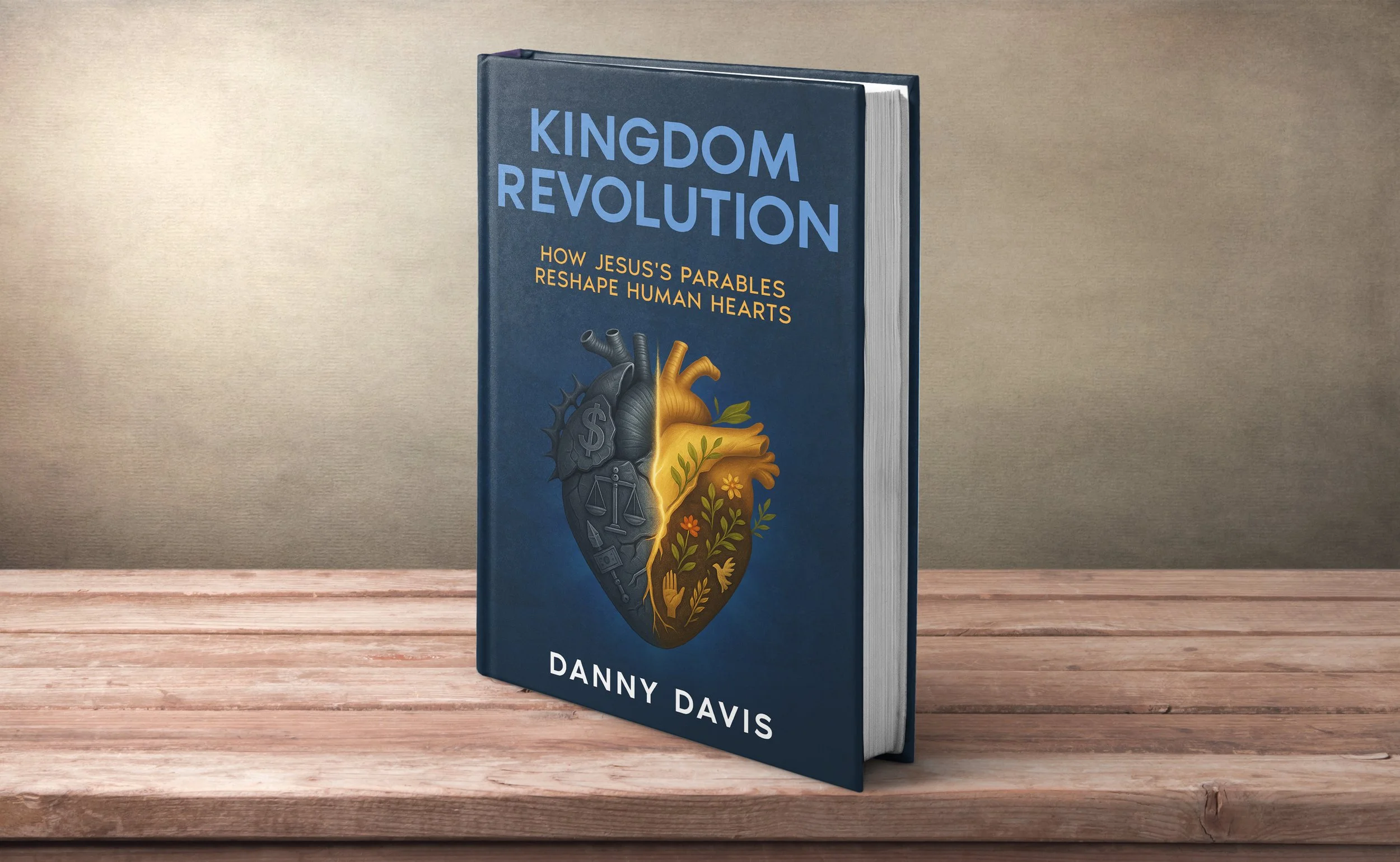
Click on the image to ORDER Kingdom Revolution (eBook & Paperback) from Amazon today!!

ORDER MY NEW BOOK TODAY FOR $9.99 (eBook)
When Ancient Meets Modern
The foundation for this starts with one of the most powerful verses in Scripture:
“The Word became flesh and made his dwelling among us. We have seen his glory, the glory of the one and only Son, who came from the Father, full of grace and truth.” (John 1:14)
When God wanted to communicate most clearly with humanity, He didn’t give us a timeless philosophical treatise. He became human. In a specific time, in a specific place, speaking a specific language to specific people. The incarnation itself proves that God values cultural context.
The writer of Hebrews puts it this way:
“In the past God spoke to our ancestors through the prophets at many times and in various ways, but in these last days he has spoken to us by his Son.” (Hebrews 1:1-2)
Many times. Various ways. God intentionally revealed Himself through real history, in real cultures. This wasn’t Plan B. This was always the plan. (If you’re just starting to develop Bible reading habits, check out my post on creating a Bible reading plan that actually works.)
The Woman, The Well, and the Cultural Walls Jesus Crossed
Let me show you what I mean. Open to John 4 and the story of Jesus and the Samaritan woman at the well. Without cultural background, it’s a nice story about Jesus being kind to an outcast. With cultural context, it becomes explosive.
Here’s what a first-century Jewish reader would have immediately understood (but what we in the Western world sometimes miss):
The gender barrier. Jewish men didn’t speak to women in public, period. Rabbis taught that speaking to women led to moral compromise. Jesus initiating this conversation would have shocked everyone present.
The ethnic barrier. Jews and Samaritans had 700 years of hostile history. After the Assyrian conquest, Israelites intermarried with foreigners—something Jews viewed as both ethnic and religious compromise. This history made Samaritans outcasts in Jewish eyes. Neither fully Jewish nor fully Gentile. The animosity ran so deep that Jewish travelers would cross the Jordan River twice to avoid walking through Samaria.
The moral status barrier. Five husbands and a current relationship outside marriage meant this woman was a community outcast. She comes to the well at noon (the hottest part of the day) to avoid other women. Jesus engaging her created a triple scandal.
The location itself. This was Jacob’s well, loaded with covenant history. When Jesus offers “living water,” He’s not just being poetic. In a desert climate where water meant life, this metaphor would have resonated powerfully.
Understanding all this changes everything. Without cultural context, you read: “Jesus was nice to an outcast woman.” With cultural context, you see: “Jesus systematically dismantled every cultural barrier that separated people from God and each other. He calls us to do the same.”
That’s not just interesting history. That transforms your Tuesday morning.
Why God Chose Cultural Particularity
So why did God do it this way? Why not give us a book that’s immediately accessible to every culture in every time period?
Because revelation isn’t about information transfer, it’s about relationships. And relationships happen in the mess of real life, real culture, real history. God didn’t send a message; He sent His Son.
Paul understood this principle. In 1 Corinthians 9, he writes about becoming “all things to all people” so that by all possible means he might save some. In Acts 17, we see him on Mars Hill, engaging in Athenian culture, quoting their poets, understanding their altars, speaking their philosophical language. Paul’s cultural engagement didn’t compromise the gospel; it opened doors for the gospel.
And here’s the vital truth: “correctly handling the word of truth” (2 Timothy 2:15) requires careful study. The Greek word Paul uses literally means “cutting straight.” Like a craftsman making precise cuts, we honor God by doing the work to understand what He originally communicated. This isn’t academic exercise. It’s faithful stewardship of His word.
From Ancient Context to Tuesday Morning
Here’s where this becomes practical. Understanding cultural context doesn’t make the Bible a history textbook. It makes timeless principles clearer. More applicable to your life today.
Go back to that woman at the well. The timeless principle isn’t “be nice to outcasts.” The timeless principle is: the gospel crosses every human barrier we construct—gender, ethnicity, moral status, social class—because God’s love transcends all human categories.
Now ask yourself: Who are the “Samaritans” in your community? What cultural taboos keep you from gospel conversations? That’s the Tuesday test. That’s ancient Scripture transforming modern life.
Or consider the father struggling with dietary laws in Deuteronomy. Without context, it’s baffling. With context—understanding that Israel’s food laws set them apart as holy, taught discipline, and protected health—you can identify the timeless principle: God cares about how His people live distinctively in the world. Now you can have a real conversation with your 8-year-old about what “living differently” means today.
The skeptical millennial reading slavery regulations needs to understand that Scripture often regulates existing cultural practices while pushing toward justice and human dignity. God met ancient Israel where they were and moved them incrementally toward His ultimate design—a movement that culminates in “there is neither slave nor free” in Christ (Galatians 3:28). Understanding this progression doesn’t weaken biblical authority; it shows how God works redemptively within human history.
Understanding these principles doesn’t just help your personal Bible reading; it transforms how you lead Bible discussions and teach others.
Three Practical Steps to Bridge the Gap
You don’t need a PhD in ancient Near Eastern studies. Not even close. Here are three steps that work for everyday Bible reading:
Step 1: Ask, “What would the original audience have understood?” When something feels confusing or foreign, pause and ask what this meant to the people who first heard it. Often a good study Bible or commentary from trusted sources like Blue Letter Bible will give you the cultural background you need. The 3-Step Inductive Bible Study Method can help you ask better questions.
Step 2: Identify the timeless principle behind the cultural practice. What universal truth was God communicating through this specific cultural form? Head coverings in Corinth pointed to honor and propriety. What does honor and propriety look like in your context?
Step 3: Apply that principle in your cultural context. How does this timeless truth shape your decisions today? The form may change; the principle doesn’t.
This isn’t complicated, and it doesn’t require hours of research for every passage. Most of the time, asking these three questions will open up the text in amazing ways.
Resources That Help (Without Overwhelming You)
You can do this work on your own, but you don’t have to. If you want to go deeper—and I hope you do—here are resources that have served me well. You don’t need all of them. Even one would enrich your Bible study significantly:
“How to Read the Bible for All Its Worth” by Gordon Fee and Douglas Stuart – The gold standard for understanding different biblical genres and contexts. Accessible, pastoral, and practical.
NIV Cultural Backgrounds Study Bible edited by Craig Keener and John Walton – Every passage includes cultural and historical notes that bring the text alive. The notes are scholarly but readable.
“Misreading Scripture with Western Eyes” by E. Randolph Richards and Brandon J. O’Brien – Eye-opening look at how our modern Western assumptions can lead us astray when reading ancient Eastern texts.
These resources won’t replace the Holy Spirit’s work in your heart, but they will help you hear what the Spirit is saying more clearly.
An Invitation to Deeper Discovery
Cultural distance doesn’t have to be a canyon keeping you from Scripture. It can become a doorway leading you deeper into it. When you understand the world of the Bible, you see God’s redemptive work more clearly. His heart more fully. His word more faithfully.
The Bible feels ancient because it is ancient. And that’s good. God didn’t wait for the perfect timeless moment to reveal Himself. He entered our mess, spoke our languages, engaged our cultures. He met people where they were—and He still does.
The same God who spoke through prophets in ancient Israel, who became flesh in first-century Palestine, who inspired Paul to write letters to Greco-Roman churches, speaks to you today. The cultural distance isn’t a bug in the system. It’s proof that our God has always been willing to cross any distance to reach us.
So the next time you encounter something in Scripture that feels foreign or confusing, don’t close your Bible in frustration. Lean in with curiosity. Ask questions. Do a little digging. You might be surprised by what you discover—not just about the ancient world, but about your own life today.
——
FYI: Some of the links above are affiliate links. If you choose to purchase items linked, I will receive a small commission from that sale.
If you find this blog helpful and want to say thanks, click here to buy Danny Davis a coffee.
