

Studying the Resurrection Accounts: Harmonizing the Gospels
You just came through Easter Sunday. The music, the message, the packed sanctuary. Somewhere on the way home — or this morning, in the quiet after the celebration — a question may have surfaced. One you didn’t quite want to raise out loud.
Why don’t the four resurrection accounts tell the same story?
Matthew says two women came to the tomb. Mark says three. Luke mentions at least five. John opens with Mary Magdalene alone. One Gospel describes a messenger whose appearance was like lightning. Another mentions a young man in white. Luke has two men in gleaming clothing. John has two angels in white.
That’s not a small discrepancy. If you’ve felt quietly unsettled by it, you’re not alone. But here’s what I want you to know before we go any further: those differences aren’t a threat to the resurrection. They’re an invitation. Studying the resurrection accounts carefully — all four of them, differences and all — is one of the most transferable skills in Bible study.
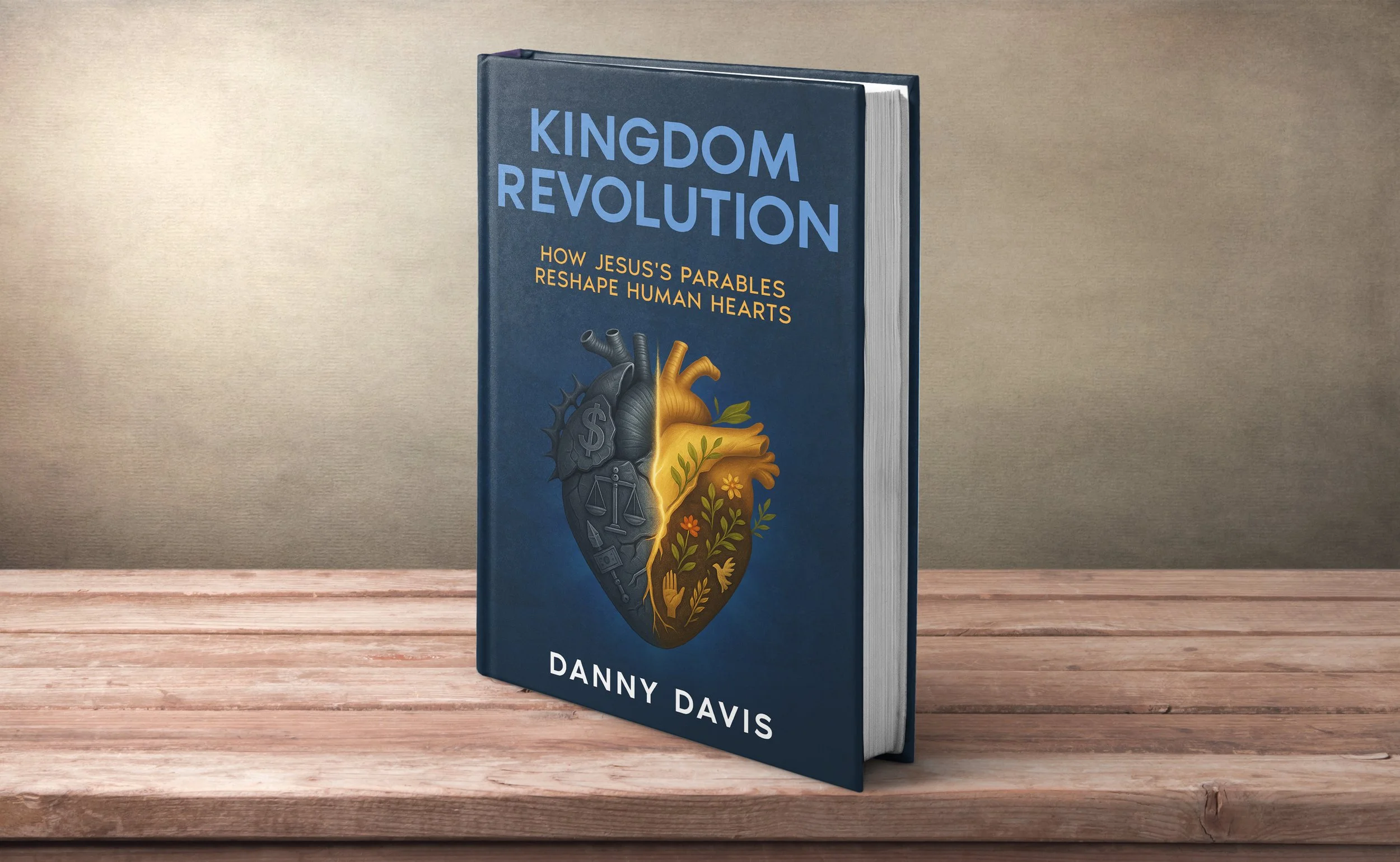
Click on the image to ORDER Kingdom Revolution (eBook & Paperback) from Amazon today!!

ORDER MY NEW BOOK TODAY FOR $9.99 (eBook)
The Differences Are Real — And Worth Taking Seriously
Let’s not smooth this over. The divergences between the resurrection accounts are real, and they deserve honest engagement rather than deflection.
The women present at the tomb vary by account. The messenger (or messengers) are described differently in each Gospel. What was said to the women differs in emphasis and detail. Mark’s account ends in a way that stops many readers cold: the women flee the tomb, trembling and astonished, and say nothing to anyone out of fear. That’s where Mark stops.
Before we look at what those differences mean, it helps to establish what we know independent of all four Gospels. In 1 Corinthians 15:3–8, Paul records an early creed — a formulaic summary of resurrection testimony most scholars date to within five years of the crucifixion, well before any of the four Gospels were written. The resurrection is historically attested in that creed. The four Gospel accounts aren’t the foundation of that claim: four different windows into an event whose core is already established.
That matters because it frees us to study the differences without anxiety. When we examine why Mark mentions three women and John mentions one, we aren’t defending the resurrection. We’re learning how Gospel writers worked.
What Independent Witnesses Actually Look Like
Here’s something worth understanding about eyewitness testimony — not as a debate tactic, but as a basic principle of historical methodology.
Independent witnesses to the same event will naturally report different details. They have different vantage points, different emphases, and different purposes for telling the story. Identical accounts across four independent sources would raise more suspicion, not less. It would suggest coordination, not testimony. This is the first skill to develop when studying parallel Gospel passages: expect differences and ask what they reveal, rather than reaching for a quick explanation.
I raise this not to put you on the defensive, but because many Bible readers carry these questions quietly. Understanding why the differences strengthen rather than undermine the accounts makes you a better reader and more confident.
There’s a second principle at work in these accounts that New Testament scholar Richard Bauckham develops in Jesus and the Eyewitnesses (Eerdmans, 2nd ed., 2017). In the ancient world, naming a source in a historical narrative was a literary signal. The name meant: this person is where this account comes from. When Mark names Mary Magdalene, Mary the mother of James, and Salome at the tomb, he isn’t padding his account with incidental detail. He’s identifying his eyewitnesses. The women who appear in these accounts aren’t interchangeable extras. They’re named sources.
One more observation. No one constructing a false story plants the first witnesses to the empty tomb as women — whose report the disciples themselves initially dismissed as nonsense (Luke 24:11). And no one invents a resurrection narrative and then ends it, as Mark does, with terrified women saying nothing to anyone out of fear. Those details are in the text because they happened.
Three Questions for Any Parallel Gospel Passage
Now we get to the transferable skill. These three questions work for the resurrection accounts. They also work for any parallel passage across the Gospels. Learn them here, and you’ll carry them into every Gospel study you do.
Work through them on the empty tomb accounts first. Then try them on any passage where two Gospels tell the same story in different ways.
Question 1: What does each writer include that others omit?
Luke names Joanna — she appears nowhere in the other resurrection accounts. John focuses almost entirely on Mary Magdalene, following her from the empty tomb through her encounter with the risen Jesus in the garden. Matthew describes the messenger in language drawn from Old Testament theophanies. Each writer made choices. Ask what those choices tell you about what mattered to that writer — and to his audience.
Question 2: What does each writer emphasize — and who was his audience?
Matthew’s angel appears “like lightning” with clothing “white as snow” — imagery that would resonate with a Jewish audience steeped in Daniel’s visions and the language of divine appearance. Mark’s “young man dressed in white” is stark and spare, consistent with his urgent, unadorned style throughout the Gospel. Luke’s “two men in clothes that gleamed like lightning” echoes the Transfiguration (Luke 9:30), a deliberate callback within his own narrative.
This is the same principle at work in the Gospel writers, who weren’t passive recorders (Study the Passion Narratives). They were theologians making deliberate choices about what to include, how to describe it, and what they wanted their readers to understand.
Question 3: Do the differences contradict, or do they complement?
This is the question most readers forget to ask. Before concluding that two accounts conflict, ask what each writer was trying to accomplish. Ask whether the details are genuinely incompatible or whether they describe different moments, different perspectives, or different aspects of the same event.
The framework applies at every step here (Read: Observe, Interpret, and Apply). Observation comes first — notice what’s actually in each text before moving to interpretation. Most apparent contradictions dissolve when you’ve done the observational work carefully.
What Mark’s Ending Teaches Us
Mark 16:8 deserves its own moment.
The women leave the tomb. They say nothing to anyone. They are afraid. That is where Mark ends his Gospel — the earliest and most reliable manuscripts end here, and the longer ending that appears in many Bible translations was added by later scribes.
Read that ending again. Trembling. Astonishment. Silence.
Think about what it would have felt like to be among the first readers of Mark’s Gospel, reaching the end and finding nothing. No appearance. No commission. No, “he is risen, go and tell.” Nothing but frightened women and an open question.
No one fabricates a resurrection narrative and closes it there. That ending is uncomfortable. It’s unresolved. It doesn’t give the reader what they came for. And that discomfort is precisely what makes it trustworthy—and worth sitting with.
For Bible students, Mark’s ending is a model: when a text makes you uncomfortable, don’t smooth it over. Ask why the writer ended there. What was he asking his readers to feel? What was he leaving unresolved on purpose? The discomfort in the text is often where the meaning lives.
Putting the Method to Work
Here’s a practical exercise for this week.
Read all four empty tomb accounts in a single sitting: Matthew 28:1–8, Mark 16:1–8, Luke 24:1–12, and John 20:1–13. Work through the three questions for each account. Write down what each writer includes, what each writer emphasizes, and whether the differences you notice contradict or complement each other.
Pay particular attention to Mark’s ending. Sit with it longer than feels comfortable.
This exercise scales. It works as a personal study, a small-group discussion, or a Sunday school lesson. The method you develop here is the same one you’ll use every time you practice in a parallel passage.
The Skill the Season Invites
The resurrection accounts don’t need to be defended against their differences. They need to be studied through them.
The writer who ends with trembling, silent women and the writer who ends with Mary meeting the risen Jesus in a garden and calling his name are both telling the truth. They are telling it from different vantage points, to different audiences, with different purposes. Learning to hold all four accounts together, without flattening them into one, is what it means to read the Gospels well.
That’s the skill this Easter season invites you to develop. Not a certainty that silences questions, but a literacy that teaches you to ask better ones. The questions aren’t the problem. They’re the doorway.
Walk through them.
——
FYI: Some of the links above are affiliate links. If you choose to purchase items linked, I will receive a small commission from that sale.
If you find this blog helpful and want to say thanks, click here to buy Danny Davis a coffee.
