
How to Read the Old Testament Without Flattening It
The Wall You Hit Somewhere Around Leviticus
You start strong. Genesis reads like a novel. Exodus has a plot you can follow with your eyes closed. Then you cross into Leviticus, and the wall shows up — chapter after chapter of skin diseases, grain offerings, and laws about mixing fabric, and you feel the pull to do one of two things.
Either you skim until you land back in a story you recognize, quietly deciding this part of the Bible was written for someone else. Or you grab the nearest study Bible and start hunting for Jesus in every lamp, every loaf, every drop of blood, until the text stops saying what it says and starts saying whatever you need it to say.
Both are the same mistake wearing different clothes. Skimming past the Old Testament and forcing Christ into every verse of it are two ways of doing the same thing: refusing to let the text be what it actually is before you decide what it means for you.
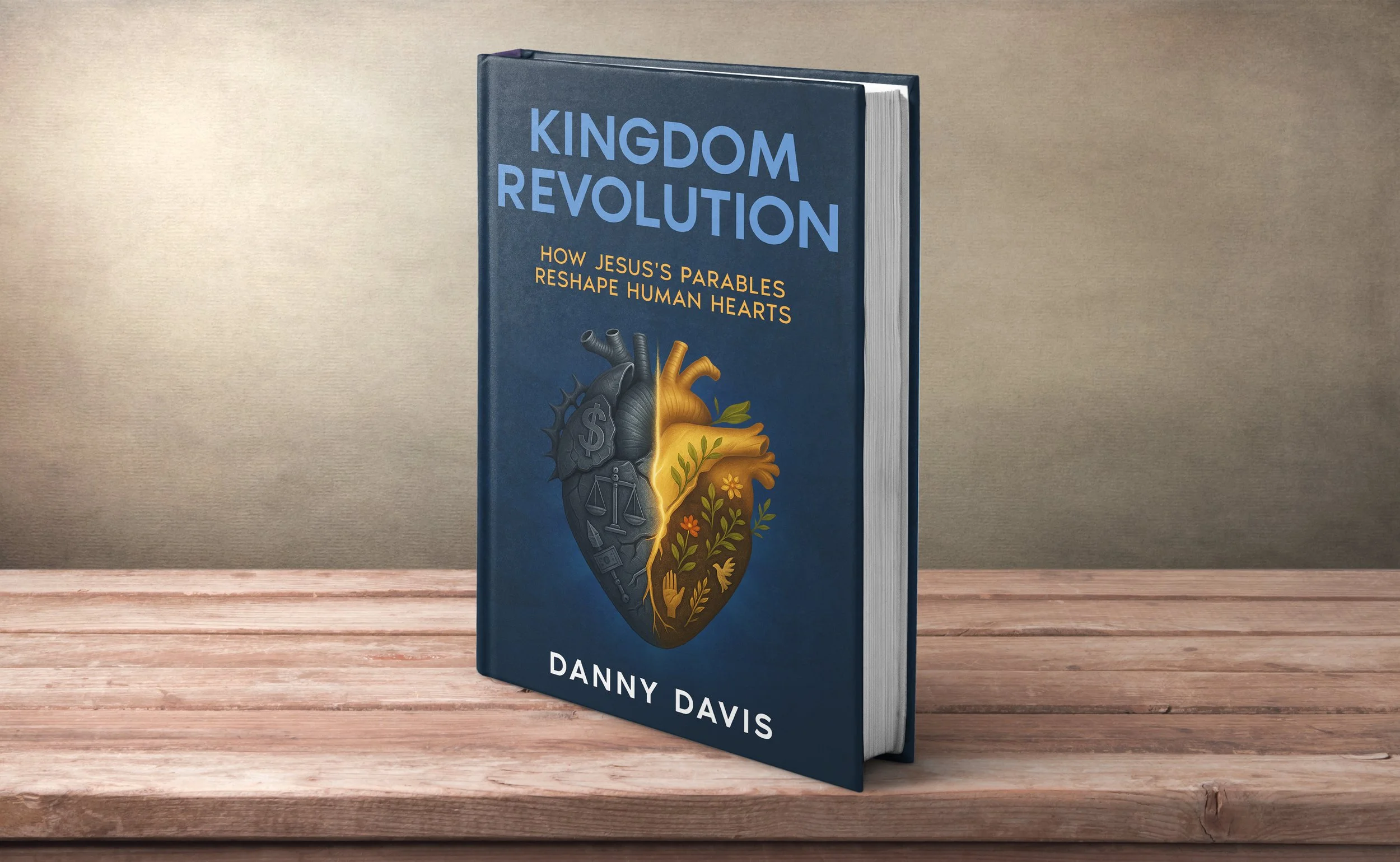
Click on the image to ORDER Kingdom Revolution (eBook, Paperback, and Hardcover) from Amazon today!!
Two Ways to Flatten the Same Book
Search "how to read the Old Testament as a Christian" and you will find two well-worn answers. The first tells you to read for timeless principles — extract the moral, leave the history behind, apply the lesson to your Tuesday. The second tells you to read with Christ in mind — find him on every page, in every detail, from the first verse forward.
Neither answer is wrong. Both are incomplete, and incomplete methods produce flat readings. The principle-only approach drains a text like Leviticus 19 of its covenant context until "leave the edges of your field for the poor" becomes generic advice about generosity — true enough, but no longer this text, spoken to this people, inside this covenant. The Christ-everywhere approach does the opposite: it skips the trip entirely and teleports straight to Jesus, treating the eleven hundred years between Sinai and Bethlehem as scenery instead of story.
What is missing from both is a method for standing inside a text before you trace it forward — reading it first as what God said to Israel, and only then following where that word travels through the rest of the canon. That is the gap this post is built to close.
The Anchor: What the Emmaus Road Assumes About Reading the Old Testament
Look at what Jesus does with two discouraged disciples on the road to Emmaus. Luke tells us that "beginning with Moses and all the Prophets, he interpreted to them in all the Scriptures the things concerning himself" (Luke 24:27).
Notice the shape of that sentence. Jesus does not skip to a proof text. He does not pull one verse out of Isaiah and call it done. He starts with Moses — the law, the covenant, the story of a people — and moves through all the Prophets, section by section, until the whole sweep of the Old Testament arrives at his own face. The method itself is the lesson: the Old Testament is not a puzzle box hiding Jesus in the corners. It is a story walking toward him, one covenant at a time.
That is the discipline this post is after — not flattening the story into a slogan, and not skimming past the parts that seem to have nothing to do with you.
Five Marks That Tell You You're Flattening the Text
Some marks reveal a habit before you are even aware you have formed it. Here are five that show up in Old Testament study more than almost anywhere else — and the corrective move for each one.
The Mark of the Missing Audience
You quote a verse without asking who first heard it, and why. A promise made to Israel at Sinai gets applied to you word-for-word, with no thought for the eleven centuries and one new covenant standing between you and the original hearer. The corrective move: before you ask what a text means for you, ask what it meant for them — the audience, the moment, the covenant they were standing inside.
The Mark of the Universal Command
Every law in the Old Testament gets treated as equally, directly binding — the same weight given to "do not murder" as to "do not wear wool and linen together." Not every command sits in the same place in the story. The corrective move: ask where a command sits — is it revealing God's unchanging character, or is it shaping a specific nation's life under a covenant that has since been fulfilled in Christ (Matthew 5:17)?
The Mark of the Missing Middle
You jump straight from an Old Testament text to Jesus, skipping every place that text travels through on the way. It feels Christ-centered. It is actually a shortcut that erases the middle of the story — the very part that shows you how the promise unfolds rather than just that it does. The corrective move: follow the text through its next appearance in the canon before you follow it to the cross.
The Mark of Moral-Only Reading
Every narrative gets reduced to "be like this person" or "do not be like that person," with God quietly written out of his own story. God is the main character of nearly every Old Testament story. The corrective move: ask what the passage shows you about God's action first — then ask what it shows you about the people responding to him.
The Mark of Forced Symbolism
The opposite failure — finding Jesus in details the author never pointed toward. The scarlet cord, the number of boards in the tabernacle, the color of a garment, all read as secret code. The corrective move: let the text's own emphasis guide you. If the author does not linger on a detail, you should not build a doctrine on it.
Watching the Marks Work: A Gleaning Law, a Widow, and a Name in Matthew's Genealogy
Take Leviticus 19:9-10: "When you reap the harvest of your land, you shall not reap your field right up to its edge... You shall leave them for the poor and for the sojourner."
Read it with the missing audience corrected, and you see it first: this is Sinai law for a specific agrarian nation, protecting the poor and the foreigner inside a covenant community that had itself once been foreign and poor in Egypt. It is not yet about you. It is about them.
Now follow the missing middle instead of skipping it. Turn to Ruth 2, and watch this exact law in motion — a Moabite widow gleaning in the field of a man named Boaz, who not only allows it but tells his workers to leave extra for her on purpose (Ruth 2:15-16). Leviticus 19 is not background noise in Ruth. It is the very law that gives Ruth a way to survive inside Israel.
Follow it once more. Ruth marries Boaz. Their son is Obed, the grandfather of David (Ruth 4:17). And when Matthew opens the New Testament with a genealogy, Ruth's name is there, four generations before the king, and roughly twenty-eight before the Messiah (Matthew 1:5). A gleaning law about field edges becomes the legal mechanism that welcomes a Gentile woman into the messianic line. That is not symbolism forced onto the text. That is the text's own trajectory, read in order.
What Changes When You Stop Flattening and Start Reading Whole
You stop treating Leviticus like a chapter to survive and start treating it like a chapter to locate. You stop asking only "what does this mean for me" and start asking "what did this mean first, and where does it go." The Old Testament stops being either irrelevant history or a hidden-picture puzzle, and starts being what it actually is: the first two-thirds of one story, told at a pace slow enough to trust.
A Pastoral Word from Thirty Years of Ministry
In more than thirty years of ministry, I have watched more believers quietly close their Old Testament than I have watched genuinely study it. Not because they doubted its authority — because no one ever gave them a way to open it that did not end in boredom or in forcing meaning that was not there. Both failures come from the same root: impatience with the story's own pace. Scripture was not written to be summarized. It was written to be walked through.
Go Back to Your Bible
Open one Old Testament passage this week — not a devotional snippet, the whole unit it belongs to. Before you ask what it means for you, ask who first heard it and why. Then trace it forward one step: where does this text show up again before it reaches Christ? You do not need every answer today. You need the discipline of asking the question in order.
If you want the fuller method behind this kind of careful reading, start with our Inductive Bible Study Method post — and if you are new to studying Scripture this way altogether, our
Start Here page will point you to where to begin.
——
FYI: Some of the links above are affiliate links. If you choose to purchase items linked, I will receive a small commission from that sale.
If you find this blog helpful and want to say thanks, click here to buy Danny Davis a coffee.
